International Peace & Conflict Resolution
Capstone Seminar

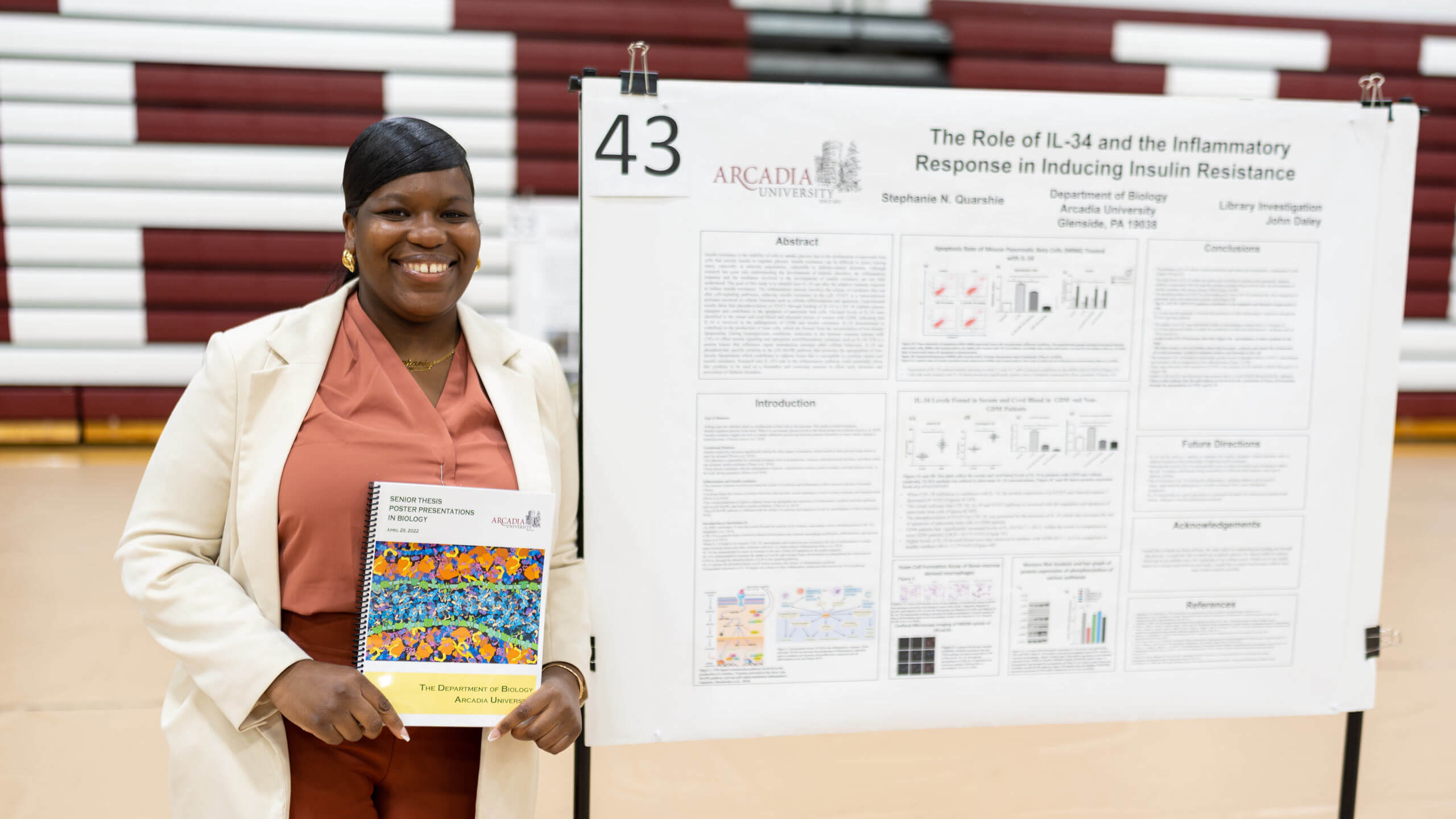
Capstone Presentation 1Master of Arts candidates are expected to return to campus in the spring of their final semester to complete their requirements en route to degree conferral. By the time they return, students will have completed all domestic and abroad, first- and second-year, study and fieldwork requirements for the degree, save their final two: Thesis and its Formal Presentation. These two elements combine to form the core of what is known in the IPCR Program as the Capstone Seminar.  
 
Simply stated, the Capstone Seminar is an organized, faculty-guided approach to synthesizing each student’s first-year theory and second-year practice into a cohesive, scholarly work and consequent presentation. Students spend the 3-4 months of their final semester composing their theses and preparing to defend them. There are two principal options for completion of thesis requirements: the Formal (Traditional) Thesis and the ‘Creative’ (Non-traditional) Thesis. (For an in-depth explanation of each, see Thesis Guidelines below.) Each student should work with his/her faculty adviser and the Program Director to decide which method of completion and presentation best suits his/her overall education and professional objectives. 

Thesis Guidelines 

As noted above, there are principally two types of theses, the ‘Formal’ or ‘Traditional’ Thesis and the ‘Creative’ or ‘Non-Traditional’ Thesis. A brief description of each is as follows:
 
1. Traditional Thesis: This is the classic critical written exposition. The student is responsible for demonstrating a clear graduate-level familiarity with published materials in the field of the thesis, knowledge of the accepted way of presenting and documenting the text, as well as the components of a well-crafted argument. The student’s argument should exhibit consistent evidence of both a ‘fresh’ and balanced approach to an existing issue or problem. Students who are interested in pursuing a Ph.D. or J.D., are interested in lecturing, pursuing academic or policy research, or in working toward a certificate of advanced study in a special focus area are strongly encouraged to pursue this option.

2. Non-Traditional Thesis: The ‘shape’ that this thesis style takes may vary from, for example, a grant proposal for an NGO, to a business plan for a start-up NGO, to a documentary film or other multi-media production. The form varies with the type of work being done. However, the project (if not principally presented in written form as, for example, a grant proposal) is still supported by a ‘relatively’ short (relative to the length of the formal thesis) written exposition elaborating critically on the project itself.

Request More InformationQuestionsApply Now

IPCR Program News
Prospective Student Events
Scholarly Activities
Find IPCR Program on Facebook

Contact Us

International Peace & Conflict Resolution 
Easton Hall, Rm. 234
267-620-4753
Directory