2019
Make An Exhibition: Arcadia's Outdoor Sculptures
September 23 – December 15, 2019
September 23 – December 15, 2019
Spencer Finch: As Lightning on a Landscape
May 29 – December 15, 2019
May 29 – December 15, 2019
Senior Thesis Exhibition 2019
April 26 – May 10, 2019
April 26 – May 10, 2019
Jennifer Manzella: City Blocks
April 15 – December 8, 2019
April 15 – December 8, 2019
Arcadia Exhibitions is pleased to present “Jennifer Manzella: City Blocks” in the Rosedale Gallery from April 15 to December 8, 2019.
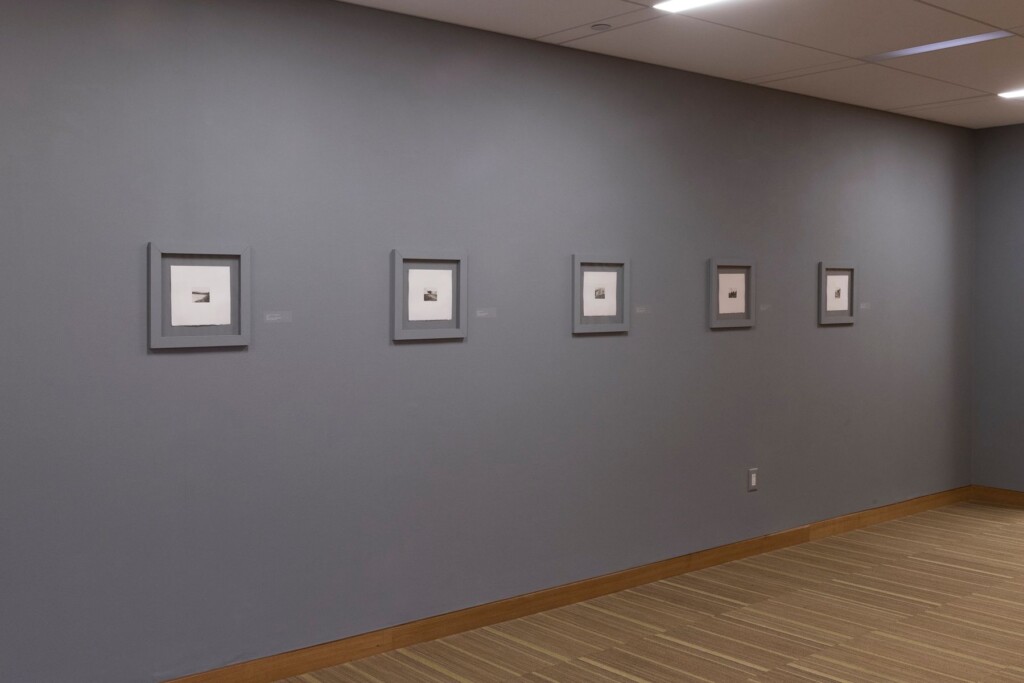
Installation view, "Jennifer Manzella: City Blocks", Rosedale Gallery, photo: Sam Fritch
The 15 intaglio prints on display in the Rosedale Gallery depict what Manzella refers to as “quiet spaces” that she discovered between buildings, near construction sites, and along the industrial waterfronts of the Delaware and Schuylkill Rivers while traveling by bike or on foot through the city of Philadelphia.
Working from her original photographs, Manzella etched these scenes into copper plates measuring 2 ¾” x 2 ½” with the height and width interchanging respective of vertical or horizontal composition. Her choice to explore the copper etching process at this compact size was spurred, in part, by the desire to duplicate the level of intimacy required to experience the landscape prints of Rembrandt van Rijn (1606-1669), which she encountered during a 2006 exhibition at the Georgia Museum of Art (Athens). Her ambition was to create works which would not only reward such close, careful looking but duplicate the outlay of time and care she puts forth while exploring her physical surroundings.
Aside from their scale, Manzella’s prints are actually quite distinct from those of the Dutch master in telling ways. According to scholar Nadine M. Orenstein, Rembrandt’s etchings tended to be “small and sketchy”, using expressive cross hatching, evocative of his drawing style, in order to build up value in his compositions. Manzella focuses more on tone and texture to evoke her subjects, achieved through a variation on the aquatint process. Used to add tonal range to etchings since the 17th century, aquatint involves applying an acid-resistant powdered rosin to targeted areas of the printing plate. When exposed to a chemical bath, the spaces around the granules etch away, producing a consistently textured surface that will hold ink for printing. The relative value of tone is controlled by the duration of the plate’s time in the acid bath. (Rather than traditional rosin, which must be heated to achieve adhesion to the plate, Manzella achieves a similar effect by applying spray paint to the copper.)
Additionally, Manzella’s depictions of gritty, seemingly forsaken neighborhoods are antithetical to Rembrandt’s idyllic, pastoral countrysides – though in her eyes, no less beautiful. Her prints unquestionably depict Philadelphia, but are clearly focused on a very particular aspect of the city. This is not the Philadelphia of the casual visitor – no Federal architecture, neo-classical museums, or Center City skyscrapers (except perhaps as incidental backgrounds). This is the city known to its residents – its neighborhoods and industrial areas – perhaps less grand and dramatic, but in no way lacking for character or history.
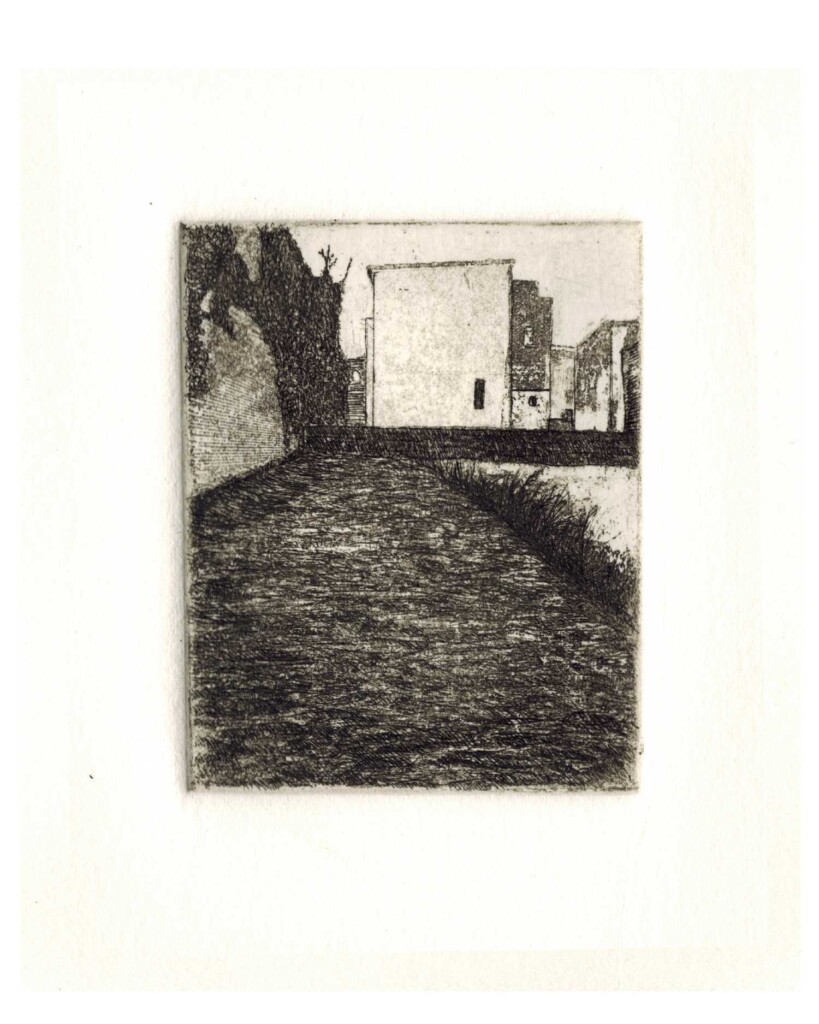
Jennifer Manzella, Second and Poplar, 2019, copper etching/intaglio print, 2 ¾ x 2 ½ inches, Courtesy of the artist
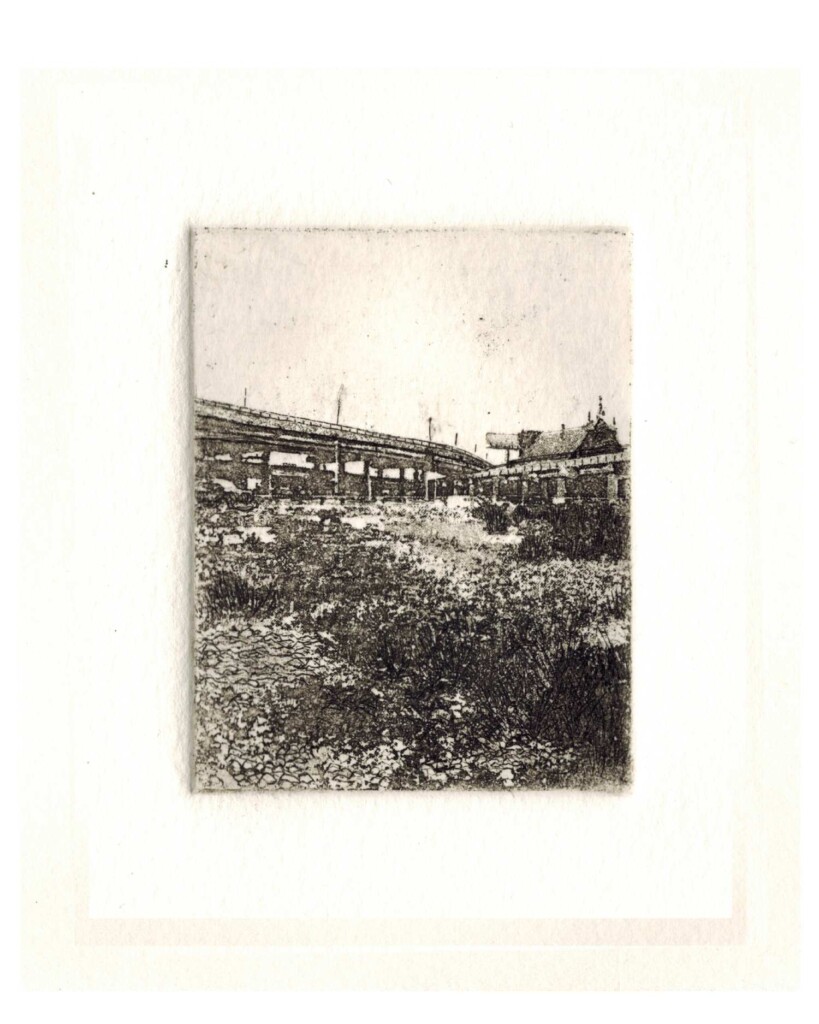
Jennifer Manzella, View From Susan's House: Wildey and Front, 2019, copper etching/intaglio print, 2 ¾ x 2 ½ inches, Courtesy of the artist
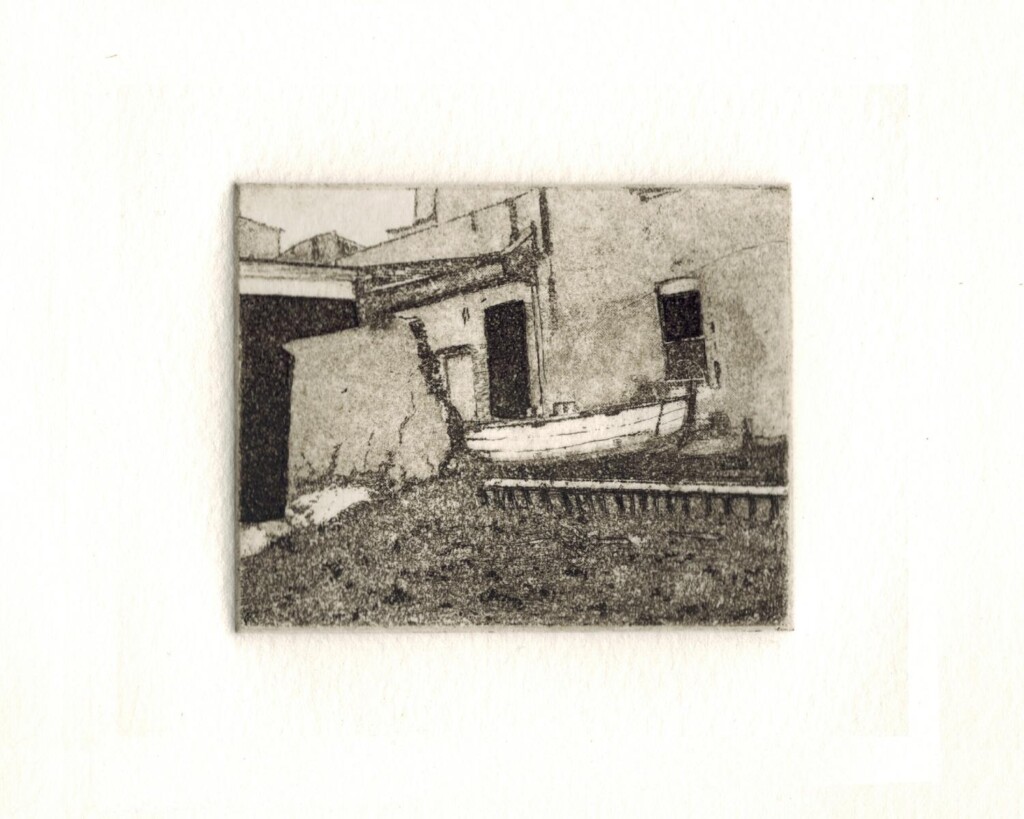
Jennifer Manzella, Beyond Voyage: Old Kensington, 2019, copper etching/intaglio print, 2 ½ x 2 ¾ inches, Courtesy of the artist
rt historian Lucy Lippard wrote that “travel is the only context in which some people ever look around. If we spent half the energy looking at our own neighborhoods, we’d probably learn twice as much.” Manzella seems to have internalized this insight. She spent twelve years as a professor living in or near Athens, Georgia, and spent many of her summers living and working in other locations for extended periods along the east coast of the United States, including New York and Maine. As a result, for much of her professional career, she has occupied environments simultaneously as resident and traveler. Her thoughtful recording of these experienced landscapes form the core of her artistic practice.
Since setting down roots in Philadelphia, either on her bike or on foot, she has continued to expend much energy exploring her adopted home in much the same way.
What seems to attract her attention, as documented in this series, are moments of absence – open areas, awash with the evidence of previous use, but now appearing abandoned. Stuccoed walls, chimneys, trees, bushes, or telephone poles appear in the backgrounds of her compositions. While they anchor each scene from a respectful distance, these structures are not her primary subjects. The distinction of the foreground goes to the relative emptiness of trampled grass, flat dirt, and piles of debris – depicted almost as oases among the unremitting blocks of rowhomes. Manzella renders these seemingly desolate spaces with great care and exhaustive detail, which ironically draws attention to how little notice they must normally receive.
Poignantly, many of the lots that Manzella has documented in this way are now sites of new construction, and so are no longer inactive. In a very deliberate sense these prints record the moment just before gentrification – a poignant protest to a loss of openness within a relentlessly unsentimental and pragmatic landscape.
ABOUT JENNIFER MANZELLA
Jennifer Manzella is an artist working primarily with relief and etching printmaking processes. Having earned an MFA in printmaking at The University of Georgia, she has worked as an art educator for over ten years. Manzella has shown her work in numerous national and international juried exhibitions, including twice at the International Print Center in New York City.
Manzella has been involved in several public art projects in New York City and Philadelphia, has been a recipient of an Andy Warhol Foundation Grant, and has undertaken several artist residencies including the Haystack Open Studio Residency at Haystack Mountain School of Crafts, Deer Isle, Maine.
Born in Wilmington, Delaware, and raised in Connecticut, she relocated to Philadelphia in the summer of 2016 after living in Athens, Georgia for 12 years. She currently teaches printmaking courses at Arcadia University, and is a member of BYO Print, a print cooperative in Philadelphia.
The exhibition is curated by Matthew Borgen, and was made possible by a donation from Theresa and John Rollins. For more information about these exhibitions, please contact Arcadia Exhibitions at (215) 517-2131 or borgenm@arcadia.edu.
PANEL DISCUSSION
April 18, 2019
A panel discussion featuring Manzella and photographer Tamsen Wojtanowski will be held in the University Commons Great Room beginning at 6:30 PM with a reception to follow. Both events are free and open to the public.
Tamsen Wojtanowski: Between My Finite Eyes
April 8 – September 2, 2019
April 8 – September 2, 2019
Writers Making Books
(in conjunction with Whitman at 200: Art and Democracy)
January 24 – April 21, 2019
(in conjunction with Whitman at 200: Art and Democracy)
January 24 – April 21, 2019
32 Annual PSEA “Touch the Future” Juried Student Art Exhibition
March 1, 2019 – March 28, 2019
March 1, 2019 – March 28, 2019
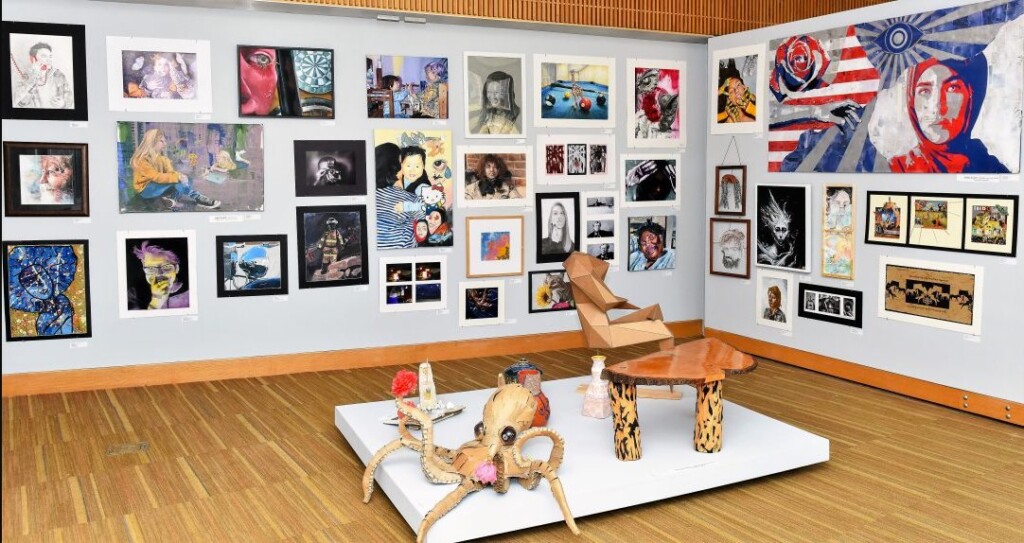
Arcadia Exhibitions is pleased to host the 32nd annual Pennsylvania State Education Association (PSEA) “Touch the Future,” Juried Student Art Exhibition in the Harrison and Rosedale Galleries from March 1 through March 28, 2019. The exhibition will feature submissions from 26 high schools in Bucks and Montgomery counties.
2018
Alumni Spotlight Exhibition: Lauren Vanni – Outside In
October 8, 2018 – February 12, 2019
October 8, 2018 – February 12, 2019
Anissa Mack: Junk Kaleidoscope
September 13 – December 9, 2018
September 13 – December 9, 2018
Carole Loeffler: Make What You Need
September 4, 2018 – February 10, 2019
September 4, 2018 – February 10, 2019
Senior Thesis Exhibtion
April 28 – May 11, 2018
April 28 – May 11, 2018
Camera Work: Making a Medium
April 25 – June 24, 2018
April 25 – June 24, 2018
Abbey Ryan: The Light / The Shade
April 16 – June 16, 2018
April 16 – June 16, 2018
Richard Mosse: Beyond Here Lies Nothin'
February 1 – April 15, 2018
February 1 – April 15, 2018
Student Biennial
January 22 – February 11, 2018
January 22 – February 11, 2018
2017
Living Rocks: Benton Spruance and the Lithographic Process
November 14 – December 17, 2017
November 14 – December 17, 2017
Alumni Spotlight Exhibition: Krista Profitt - Shavers, Savers, Mansplainers
October 6 – December 3, 2017
October 6 – December 3, 2017
Astrid Bowlby: When the Shadow is Not Your Shadow
September 14 – October 29, 2017
September 14 – October 29, 2017
Senior Thesis Exhibition
April 28 – May 19, 2017
April 28 – May 19, 2017
John Hathaway: Studies, Drawings, Paintings, and Prints
April 3 – September 17, 2017
April 3 – September 17, 2017
Subway Therapy: a project by Matthew ”Levee” Chavez
March 1 – April 2, 2017
March 1 – April 2, 2017
2016
David Guinn: Before the Wall - Mural Sketches and Designs
October 10, 2016 – January 8, 2017
October 10, 2016 – January 8, 2017
Alumni Spotlight Exhibition: Jesse Vincent - Other Than a Memory
September 28, 2016 – January 16, 2017
September 28, 2016 – January 16, 2017
Arcadia University’s Art Research Collaboration (ARC) Exhibition Program is pleased to present a new installation by Jesse Vincent ’11 for the fifth annual Alumni Spotlight Exhibition. On view in the University Commons Art Gallery through Jan. 16, 2017, “Other Than a Memory” combines video, sound, and sculptural elements to create an environment that questions the nature of remembering.Vincent’s lecture, “Emergency Crossover,” will survey her experiences as an artist since graduating from Arcadia. The event will take place on Sept. 29, from 4:30 to 6:00 p.m. in the University Commons Great Room. A reception will follow immediately in the gallery upstairs where the public will be able to experience Vincent’s new work.
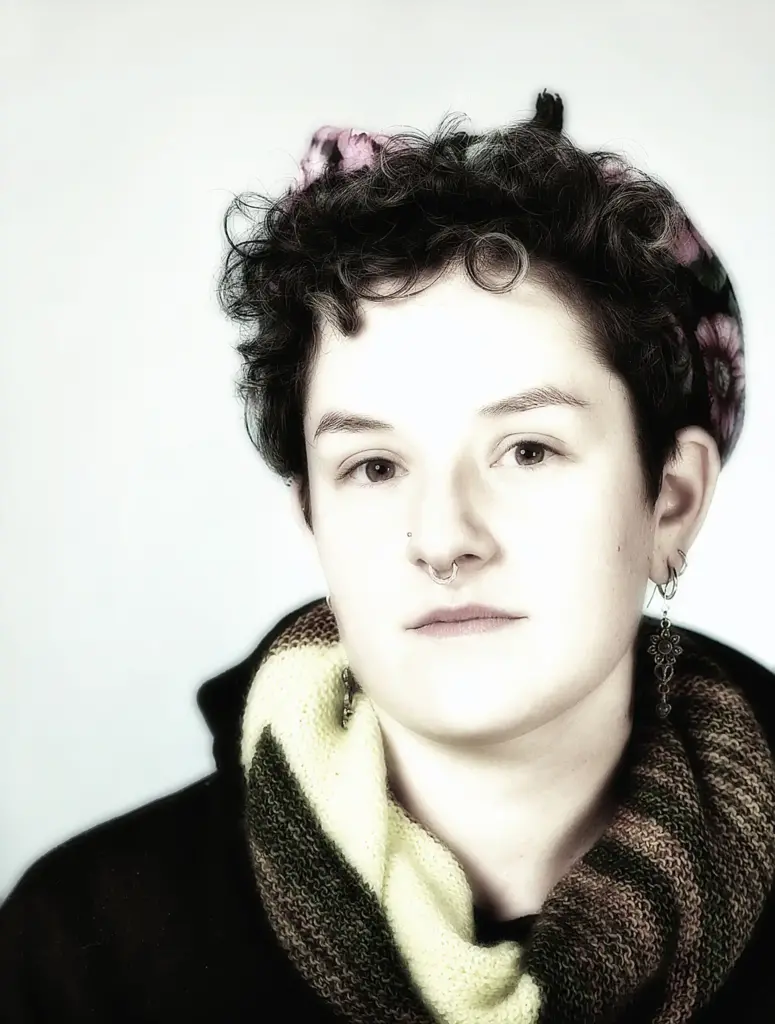
For this installation, Vincent has constructed a light-tight cube within the exhibition space which houses five projected videos utilizing footage and sound recordings of her family gatherings. Upon entering the space the viewer is surrounded by the sights and sounds of innumerable graduations, weddings, birthdays and other events projected onto surfaces layered with small squares of sheer white fabric.
The immersiveness of the space, combined with the volume of shifting and overlapping images is meant to provide the viewer with the experience of inhabiting Vincent’s own mind as she attempts to retrieve a distinct, coherent record of her past.
Her process is confounded by the memories of redundant events, dreams, verbal accounts, and Vincent’s own subsequent viewing of these recorded moments, as well as by the organic degradation caused by the passage of time.
Faculty Exhibition: Revolutions of Making
September 20 – December 11, 2016
September 20 – December 11, 2016
The Arcadia University Art Gallery is pleased to present “Revolutions of Making: Faculty Exhibition 2016. The theme of this year’s biennial faculty exhibition is the relationship between art making and emerging technology, a subject prompted by the Department of Art and Design’s new digital fabrication program.
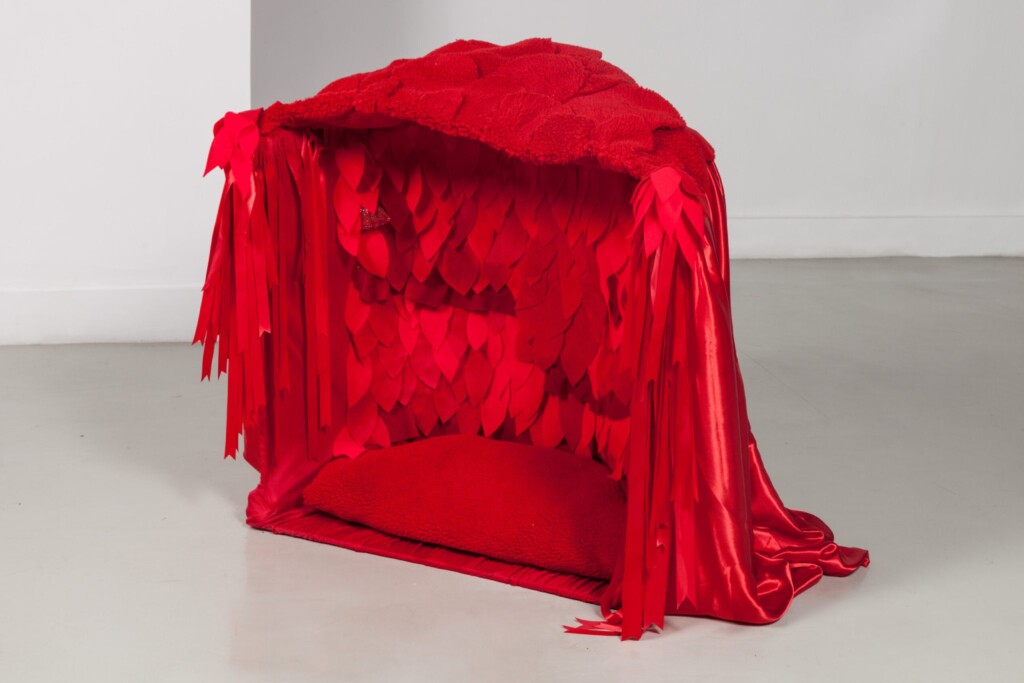
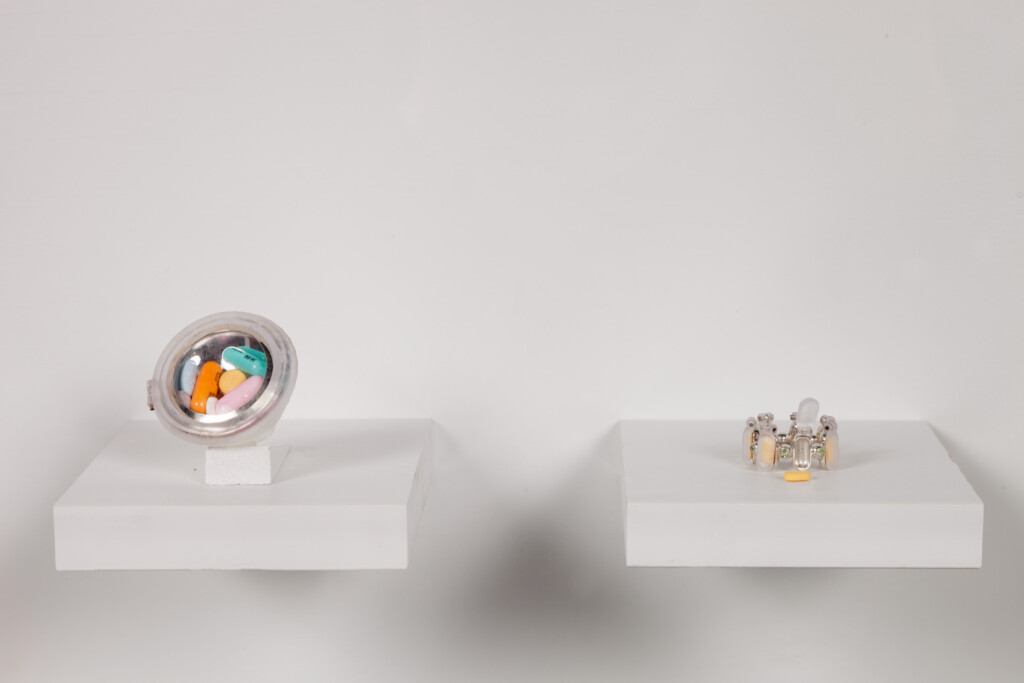
Karen Misher, Daily Dose (2016) acrylic, optic mirror, optic lens, prescription medication, and Sunny Daze (2016) sterling silver, acrylic, Peridot, Prozac
Works by: Betsey Batchelor, Matthew Borgen, Michael DeLuca, Maria DiMauro, Adam Hess, Christine Kemp, Alisa Kleckner, June Lee, Carole Loeffler, Robert Mauro, Jennifer Manzella, Karen Misher, Gregg Moore, Jamar Nicholas, Alan Powell, Krista Profitt, Scott Rawlins, Abbey Ryan, Justin Staller, Tamsen Wojtanowski, and Maryann Worrell.
Gallery Talks:
October 17, 2016 Michael DeLuca, Carole Loeffler, Scott Rawlins and Maryann Worrell
October 24, 2016 Matthew Borgen, Alisa Sickora Kleckner, Karen Misher, Jamar Nicholas, and Abbey Ryan
Jane Geayer: Harmonious Geometries
June 2 – August 21, 2016
June 2 – August 21, 2016
Katherine Cambareri: Well, What Were You Wearing?
June 2 – July 15, 2016
June 2 – July 15, 2016
Senior Thesis Exhibition
April 29 – May 20, 2016
April 29 – May 20, 2016
Pati Hill: Photocopier—A Survey of Prints and Books (1974-83)
February 25 – April 24, 2016
February 25 – April 24, 2016
Student Biennial
January 19 – February 7, 2016
January 19 – February 7, 2016
2015
Alumni Spotlight Exhibition: Jennifer Titone
November 18 – December 20, 2015
November 18 – December 20, 2015
Threading the Maze
August 27 – October 18, 2015
August 27 – October 18, 2015
Biodesign Atacama: Imaging New Life Forms in the Northern Chilean Desert
August 11 – November 29, 2015
August 11 – November 29, 2015
The Richard E. Fuller Art Gallery (1962-85): A History of Arcadia University's First Exhibition Space
April 20 – October 11, 2015
April 20 – October 11, 2015
Coordinates: Drawings and Prints Marking Five Exhibitions at Beaver College (1977–84)
April 8 – 21, 2015
April 8 – 21, 2015
Works on Paper: Survey of Purchase Prizes (1978 - 2009)
February 10 – March 15, 2015
February 10 – March 15, 2015
Robert Asman, Bo Bartlett, Alysa Bennet, Joseph Danciger, Dominic Episcopo, Carl Fudge, Michael Garrity, Margaretta Gilboy, David Goerk, A.P. Gorny, Marilyn Holsing, James Johnson, Lois Johnson, Virgil Marti, Patricia Moss-Vreeland, Robert T. Pannell, W. Barrett Pope, Richard Proctor, Jill A. Rupinski, Judith Schaechter, Anne Seidman, Janet Towbin, Carla Tudor, Barbara Woodall
Arcadia University Art Gallery is pleased to present an exhibition showcasing 24 works acquired for the school’s permanent collection through its juried “Works on Paper” series. The selected pieces represent exhibitions from 1978 to the latest iteration of the show presented in 2009. Organized as part of the gallery’s spring celebration of its 30th anniversary at its current location in the Spruance Art Center, the show features an eclectic range of drawings, prints, collages, and photographs created by artists living within a 25-mile radius of the gallery. The exhibition is intended both as a look back as well as a means of preparing to reboot this juried series for the 2015-16 season.
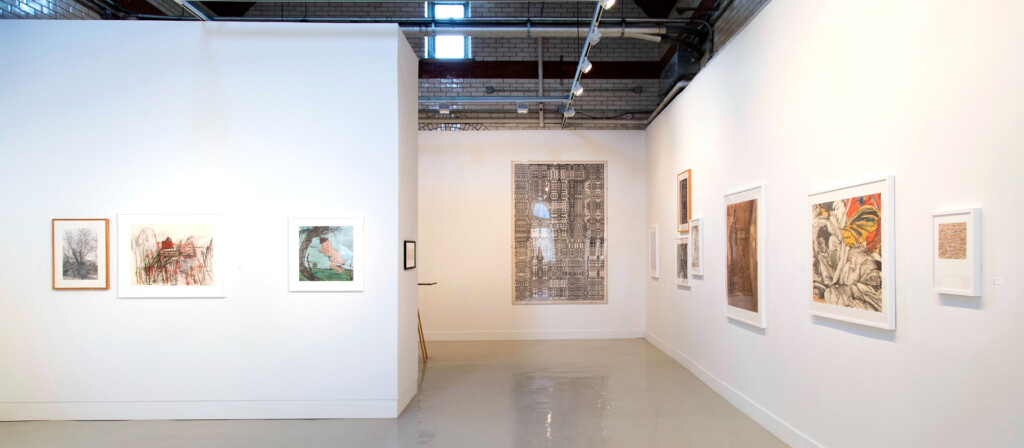
Installation view, photo: Denise Henhoeffer
A significant and long-running component of the Art Gallery’s programming, “Works on Paper” has played an instrumental role in highlighting the production of contemporary artists in the Philadelphia region over the past 40 years. While figuration and landscape are prominent themes, the show can be more broadly characterized by its spectrum of inventive approaches to working both on and with paper at an impressive range of scales.
Complementing the handful of more narrative works are two striking examples of print-based appropriation: a portfolio of woodcuts by A. P. Gorny that replicates a 1954 book by Yves Klein documenting reproductions of monochrome canvases the painter hadn’t yet realized and Carl Fudge’s 8 x 5-foot mash-up of Albrecht Durer’s 1510 woodcut, The Resurrection. Drawings by W. Barrett Pope, Anne Seidman, and Janet Towbin investigate questions of control and expression germane to abstraction. Social commentaries by Judith Schaechter and Marilyn Holsing, along with Robert T. Pannell’s meditation on colonialism, are countered by the caprice of David Goerk’s cosmic Polaroid and Barbara Woodall’s roadmap collage.
Artisanal approaches to printmaking and photography offered by Alysa Bennet and Robert Asman find their foils in Virgil Marti’s early digital inkjet print and James Johnson’s cardboard peep box. Overall, the evolution of both international and regional modes of art-making that have characterized the last several decades is readily discernible.
The gallery’s “Works on Paper” shows have been juried by an esteemed roster of curators and critics, along with a few artists early on in the series (see full list below). Jurors review only actual works delivered to the gallery, as opposed to reproductions, which has helped ensure a consistent level of quality. Each exhibition has included at least one purchase award, admitting the selected work into the school’s permanent holdings. The current survey represents the first time that these works have been displayed as a collection.
The first juried drawing exhibition at Beaver College titled the “Regional Women’s Drawing Show,” was organized by then Beaver faculty member Judith Brodsky in 1974 as a part of a city-wide series of events and exhibitions known as “Philadelphia Focuses on Women in the Visual Arts.” (Brodsky went on to found and direct The Brodsky Center for Innovative Editions at Rutgers University.) The call for drawings by regional artists soon became an annual event for the gallery, known as the “Eastern Pennsylvania Regional Drawing Exhibition.” Nine of the 24 purchase awards featured come from these shows, presented in the Richard Eugene Fuller Gallery, the school’s original gallery space on the ground floor of the campus library.
2014
Band of Artists: Spectrum Order Disorder
October 13, 2014–February 8, 2015
October 13, 2014–February 8, 2015
Arcadia University’s ARC Exhibition Program is pleased to present Band of Artists: Spectrum Order Disorder, on display in the University Commons Art Gallery and the Great Room Lobby through February 8, 2015.
Installation view, Band of Artists: Spectrum Order Disorder, 2014, Commons Art Gallery. Photo: Matthew Borgen.
This exhibition, co-curated by Matthew Borgen, exhibition coordinator of the ARC Exhibition Program and Alan Powell, co-director of Band of Artists, presents the work of individuals who, by a variety of creative paths, have converged at the crossroads of art making and neurological variation.
Central to this display is a comprehensive review of the performances of the artistic collective Band of Artists. Founded by Sutie Madison and Alan Powell in 2011, the group consists of artists, dancers, scientists, and educators whose focus is the use of performance, music, and art, as a means for altering public perception with respect to neurological disorders.
The choreography of Band of Artists’ live stage performances, which are performed with a troupe of dancers and musicians, is a hybrid of ballet, hip-hop, and the motor and verbal tics Madison manifests as a result of Tourette Syndrome. The exhibition presents video documentation of performances representing Madison’s earliest attempts at developing her tics into a personal visual language. These include Future’s Going, Madison Code, and Twitch Trials no. 2 and 3 (2011). Also included is Madison’s work with the Everett Company in Providence, Rhode Island in June, 2011 whose collaborative approach, eclectic influences, and narrative structure would greatly influence Band of Artists’ long form performances such as Unveiling (2012) and Intersection: Tourette Syndrome (2013).
Along with Powell, who serves as videographer for Band of Artists’ performances, Gary Funk uses photography to document the dance troupe as they practice. His images of Madison’s tics, as well as his own landscape photography are included in this exhibit.
Other examples of photography in this exhibition include a series of close up views of flowers and insects taken by Jeff Schultz, a professor in Arcadia University’s school of education. The artist, writer, and curator Brian Peterson, is presenting photographs from his series I Sing the Body, which are images that combine natural foliage and self-portraiture. Both bodies of work express, in different ways, the changes that come from living with Parkinson’s Disease.
Installation view, Band of Artists: Spectrum Order Disorder, 2014, Commons Art Gallery. Photo: Matthew Borgen.
Installation view, Band of Artists: Spectrum Order Disorder, 2014, Commons Art Gallery. Photo: Matthew Borgen
The exhibition also presents documentary films by Joey Abrams, Renee Platz, Eran Preis, Chris Sarachilli, and Katie Waters, which detail the struggle with disorders such as addiction, paranoid schizophrenia, obsessive compulsive disorder, and general anxiety disorder. Brad Christenson’s Hope: A Documentary About Alzheimer’s and Art as Therapy (2012) tells the story of Dr. William Garfinkle and how he reinvented himself from neuroradiologist to artist after his diagnosis with Alzheimer’s. Several of Garfinkle’s collages are displayed in the gallery. Others contributing video pieces to the exhibition include Lee Clawson, Kyle Dixon, Allee Garry, and Jessica Kroboth.
Band of Artists will be presenting their latest work in the Arcadia University Commons Great Room on Monday, November 17 at 7:00PM. The performance will be followed by a question and answer session with the artistic directors, and a reception held in the Commons Art Gallery. A series of panel discussions with the artists from this exhibition, as well as scientists and educators who focus on neurological disorders will be announced soon.
This exhibition was made possible by a donation to the Gateway Society by Theresa and John Rollins. For more information about the exhibit, contact the ARC Exhibition Program (215-572-2629).
Still image of a performance by Band of Artists, 2014. Photo: Matthew Borgen.
Performance
Band of Artists: Order Out of Chaos
November 17, 2014 at 7:00 PM
Great Room, University Commons
Q&A Panel at 8:00 PM
Reception with refreshments in Commons Art Gallery at 9:00 PM
The event is free and open to the public.
Faculty Exhibition
September 9 – November 23, 2014
September 9 – November 23, 2014
Senior Thesis Exhibition
April 25– May, 2014
April 25– May, 2014
Signpost: A Spring Preview Photography Exhibition
April 28–October 5, 2014
April 28–October 5, 2014
Alumni Spotlight Exhibition: Jannalyn Bailey
April 4 – September 14, 2014
April 4 – September 14, 2014
Free Play
March 18 – April 20, 2014
March 18 – April 20, 2014
Student Biennial
January 20–February 23, 2014
January 20–February 23, 2014
2013
Anonymous Shiva Linga Paintings
November 15 – December 22, 2013
November 15 – December 22, 2013
Jamar Nicholas: World Building
October 28, 2013 – February 16, 2014
October 28, 2013 – February 16, 2014
Alive! Revealing the Art of Puppetry
September 16 – December 1, 2013
September 16 – December 1, 2013
No Bingo for Felons
August 28 – November 3, 2013
August 28 – November 3, 2013
Alumni Spotlight Exhibition: Christopher Thomas
May 13 – August 30, 2013
May 13 – August 30, 2013
Senior Thesis Exhibition
April 26 – May 16, 2013
April 26 – May 16, 2013
Presence of Process: Art and Design Student Exhibition
April 1 – May 3, 2013
April 1 – May 3, 2013
26th Annual PSEA “Touch the Future” Juried Student Art Exhibition
February 15, 2013 – March 14, 2013
February 15, 2013 – March 14, 2013
JG: a film project by Tacita Dean
February 7 – April 21, 2013
February 7 – April 21, 2013
2012
Faculty Exhibition: The Persistence of Drawing
November 15 – December 16, 2012
November 15 – December 16, 2012
Mitos Y Realidades: Inspiraciones De La Republica De Cuba / Myths and Realities: Inspirations from the Republic of Cuba
November 6, 2012 – January 6, 2013
November 6, 2012 – January 6, 2013
Martha Wilson: Staging the Self
August 24 – November 4, 2012
August 24 – November 4, 2012
Andrew Ortwein: The Greatest War
June 8 – September 8, 2012
June 8 – September 8, 2012
Senior Thesis Exhibition
April 27 – May 18, 2012
April 27 – May 18, 2012
A Closer Look 8: Dechemia, Sebastien Leclercq, Josh Shaddock, Brent Wahl
March 2 – April 22, 2012
March 2 – April 22, 2012
Student Biennial
February 2 – 19, 2012
February 2 – 19, 2012
2011
Francis Cape: Utopian Benches
November 10, 2011 – January 2, 2012
Arcadia University Art Gallery
November 10, 2011 – January 2, 2012
Arcadia University Art Gallery
Where the installation succeeds most eloquently is in displaying the commonality between furniture and sculpture and the sense of community that can be engendered by something as simple as sharing abench.
—Edith Newhall
Arcadia University Art Gallery is pleased to announce the opening of Utopian Benches, a new project by the British sculptor Francis Cape. The show, Cape’s first solo exhibition in the Philadelphia area, is comprised of twenty reconstructed benches originally designed for American utopian communities.
Tables of Contents: Ray Johnson Bob Box Archive
September 6 – October 16, 2011
Arcadia University Art Gallery
September 6 – October 16, 2011
Arcadia University Art Gallery
About the Exhibition
Arcadia University Art Gallery is pleased to announce the opening of “Tables of Contents: Ray Johnson Bob Box Archive”, an exhibition exploring the seven-year exchange between the legendary late artist Ray Johnson and college-artist Robert Warner. Featuring the contents of 13 cardboard boxes given to Warner by Johnson in 1990, the exhibition also includes a sampling of the two artists’ correspondence and a selection of finished collages from the Ray Johnson Estate. Initially presented at Esopus Space (New York City) in June 2011, the exhibition coincided with the latest issue of Esopus Magazine, which featured a generously illustrated 16-page spread about the archive.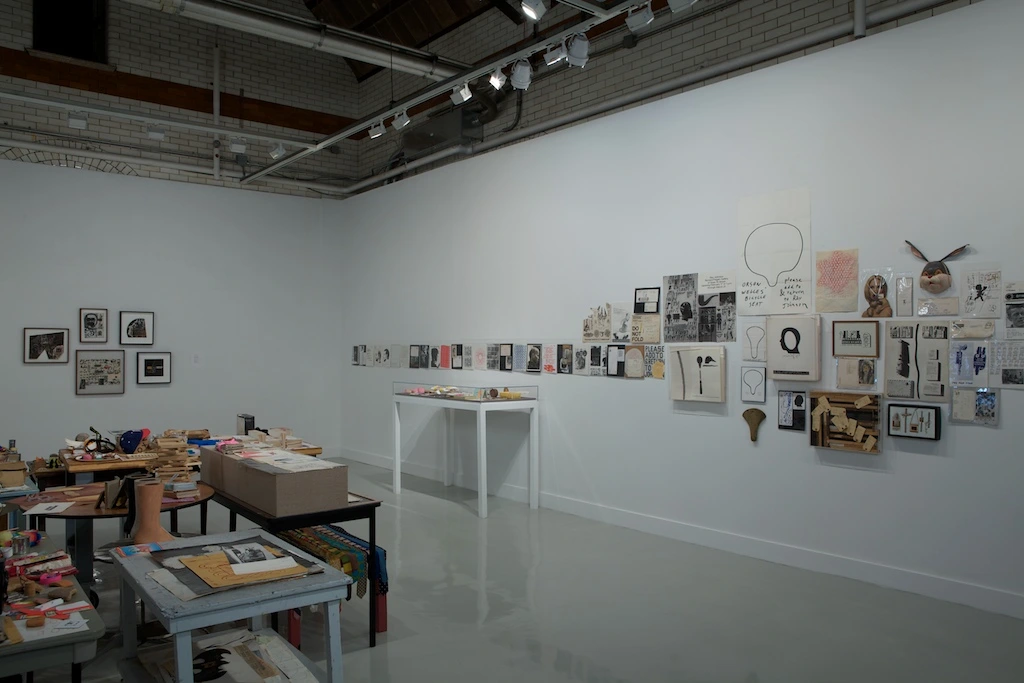
Installation view, "Tables of Contents: Ray Johnson Bob Box Archive," 2011, Spruance Gallery, photo: Arcadia Exhibitions
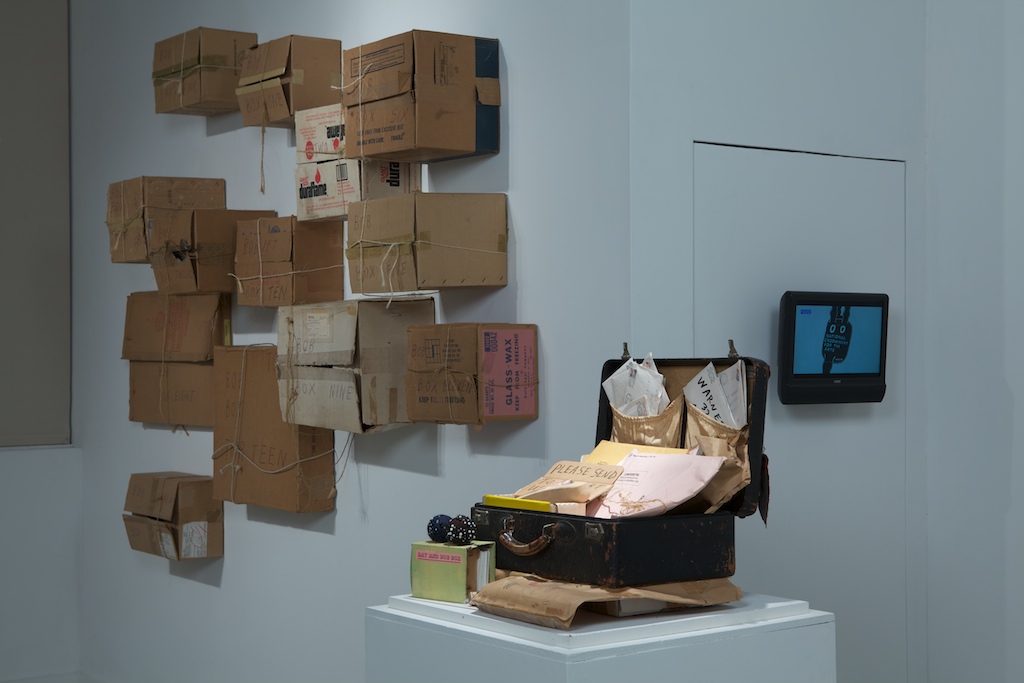
Installation view, "Tables of Contents: Ray Johnson Bob Box Archive," 2011, Spruance Gallery, photo: Arcadia Exhibitions
At one point in 1990, Warner informed Johnson that he was going to be at garage sale in Great Neck, New York. As Warner tells the story in the Esopus 16 interview: “Ray called and asked me if I was going to have transportation back to the city, and I told him I would. He pulled up in front of the house in his Volkswagen. He was very cordial and shook hands with everyone, and then he said to my friend’s husband, who was driving me back, ‘Can I put these things I brought Bob in your trunk?’ And I said, ‘What things?’ He proceeded to take out of the car 13 cardboard boxes tied with twine, labeled ‘Bob Box 1,’ ‘Bob Box 2,’ ‘Bob Box 3’….”
The cardboard boxes, temporarily relieved of their contents and still wrapped in the string that Warner has never untied, are also on display in the gallery. The set of thirteen is not unlike other boxes of documents and objects that Johnson offered (either en masse or one at time) to friends and correspondents over the years, including Fluxus artists Alison Knowles and Dick Higgins. The identity of these cartons as gifts distinguishes them from Andy Warhol’s 612 cardboard “Time Capsules”—filled from 1974 to Warhol’s death in 1987—with which they nevertheless have an affinity. (In considering Johnson’s boxes, it might be useful to remember that the artist frequently used cardboard cartons to transport his finished collages to meetings with collectors—sometimes scheduled in hotel rooms—during which he would unpack the works he’d selected and display them on available furniture.) Johnson was not insensitive to the impact these offeringshad on his friends. Worried that the contents of the five large boxes he gave to poet Coco Gordon were making her anxious, Johnson told her to “just throw it all out into the water”. Tellingly, when police entered Johnson’s house following his drowning suicide, they found it filled with neatly stacked cardboard containers.
Among the affecting dimensions of this exhibition is the precarious status of the items the Bob Boxes have housed for so long. Writing in The New York Times about the show’s original incarnation at Esopus Space, art critic Holland Cotter mentions the unspoken understanding that Warner would take care of the containers. (In the space of only two years, Johnson had come to know the optician as a responsible and dedicated correspondent.) Viewers studying the archive as presented in the gallery may begin to sense for themselves the “custodial duties” originally bestowed by Johnson to Warner. In this way, they might experience a variation of the “collaboration and physical inconsequentiality” on which Cotter claimed much of Johnson’s work was based. Ultimately we are left with both the challenge and the pleasure of reading the archive as an open but mysterious landscape of clues to the fascinating world Johnson made for himself and the way he shared that world with others.
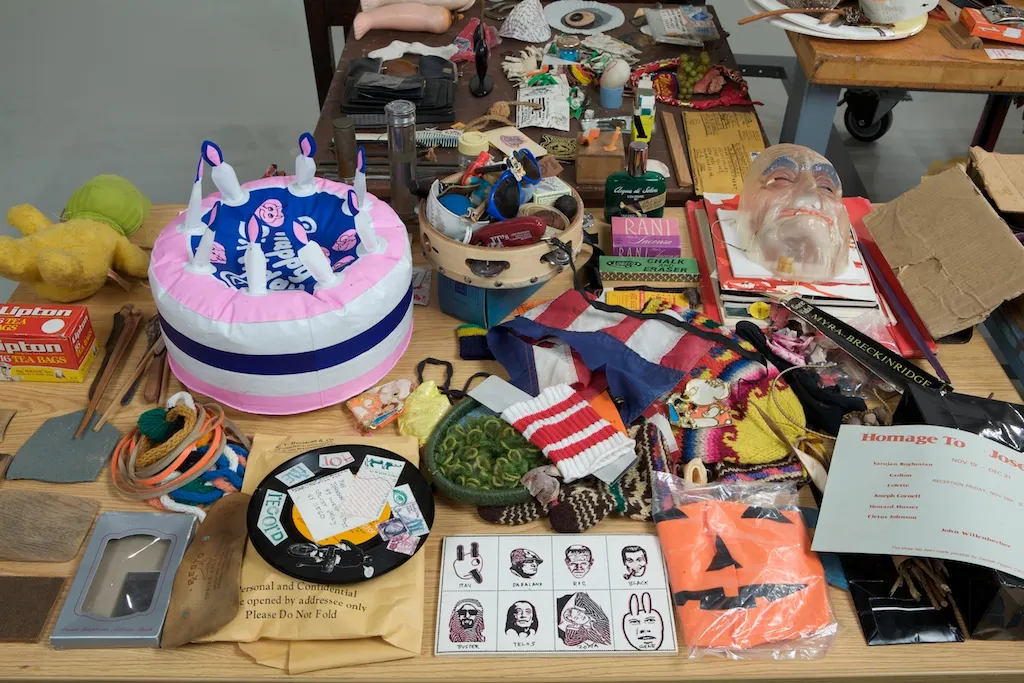
Instllation view, detail, "Tables of Contents: Ray Johnson Bob Box Archive," 2011, Spruance Gallery, photo: Arcadia Exhibitions
Event in conjunction with Tables of Contents: Ray Johnson Bob Box Archive
OPENING EVENT
Tuesday, Sept. 13, 6:30 PM, Little Theatre, Spruance Art Center
Conversation between Robert Warner and Tod Lippy, Editor, Esopus Magazine. Followed by a reception in the art gallery. Free and open to the public.
GLENSIDE CORRESPONDENCE SCHOOL
Saturday, Oct. 1, 2-5 PM, Art Gallery
An afternoon with Robert Warner and company. Free and open to the public.
Join artist and exhibition curator Robert Warner in a variety of activities pertaining to “Tables of Contents”. In addition to offering an informal tour of the show, Warner will demonstrate processes pertaining to his correspondence with Johnson, including the creation of silhouette portraits and the use of rubber stamps. Employing a light box, Warner will explore—for the first time—an archive of carbon paper (c. 1950 – 1990) that Johnson used to copy typed letters and drawings. To address the influence of Joseph Cornell on Johnson’s practice, the afternoon will include a conversation with artist Howard Hussey, studio assistant to Cornell from 1966 to 1972. More details and a schedule of activities to be announced.
About Robert Warner
Born in Geneva, New York, in 1956, Robert Warner is a collage artist, letterpress printer, optician, and eyewear designer who currently resides in Greenwich Village, New York City. Untrained as an artist, Warner’s seven-year correspondence with Ray Johnson, begun in 1988, encouraged him to take up collage and initiated his interest in hand-set type, letterpress printing, and the production of custom, handcrafted display boxes. From 1995 to 2010 he worked as a job printer for Bowne & Co. Stationers at the Seaport Museum (New York City) where, using historic presses, plates, and equipment, he produced stationery and commemorative items to help raise funds for the institution. His collages, which incorporate vintage images and papers, have been exhibited at the New York Public Library, Pavel Zoubok Gallery, and the Center for Book Arts, all in New York City.
About Tod Lippy
Tod Lippy is the editor and founder of Esopus, a twice-yearly arts magazine esteemed for its unmediated perspectives on contemporary culture from a wide range of creative professionals. Referred to by The Atlantic Monthly this past April as “the best magazine you never heard of”, it includes artists’ projects, critical writing, fiction, poetry, visual essays, interviews, and, in each issue, an audio CD. Published by the non-profit Esopus Foundation Ltd., the magazine, which is entirely free of advertising, has a mission “to provide an unfiltered, non-commercial space in which creative people and the public can connect in meaningful, productive ways.” In addition to being president of the Esopus Foundation Ltd., Lippy also runs Esopus Space, an alternative exhibition and performance venue that began presenting public exhibitions in 2009. Lippy was the editor and co-founder of Scenario: The Magazine of Screenwriting Art (1994–97), the publisher and co-editor of publicsfear magazine (1992–94), and a senior editor at Print magazine from 1990–1997. His 2000 book,Projections 11: New York Film-Makers on Film-Making, was published by Faber & Faber. Lippy’s 1999 short film, Cookies, was featured in over 20 film festivals in the U.S. and abroad.
Lippy has lectured on Esopus at many educational and cultural institutions, including the American Library Association, the American Institute for Graphic Arts, the Cooper Union for the Advancement of Science and Art, the School of Visual Arts M.F.A. Design Program, Hunter College’s M.F.A. Program; the Fashion Institute of Technology, Rice University, USC’s Roski School of Fine Arts, New York’s Nightingale-Bamford School for Girls, and the Elizabeth Irwin High School. He has been interviewed on the same subject for a number of journals, websites, radio programs, and books, including Becoming a Graphic Designer (Wiley, 2005) and Fresh Dialogue: Making Magazines (Princeton Architectural Press, 2007).
Senior Thesis Exhibition
April 29 – May 5, 2011
April 29 – May 5, 2011
Keith Haring: Subway Drawings
March 31 – April 27, 2011
March 31 – April 27, 2011
Faculty Exhibition: Scale 1:1
January 25 – March 6, 2011
January 25 – March 6, 2011
2010
Ai Weiwei: Dropping the Urn (Ceramic Works, 5000 BCE – 2010 CE)
February 24 – April 18, 2010
Arcadia University Art Gallery
February 24 – April 18, 2010
Arcadia University Art Gallery
Arcadia University Art Gallery is pleased to present “Ai Weiwei: Dropping the Urn (Ceramic Works, 5000 BCE – 2010 CE)”, a solo exhibition of works by Chinese, Beijing-based artist Ai Weiwei (b. 1957). Opening February 24, 2010, the show will run through April 18, 2010 and is scheduled to coincide with the spring 2010 conference of the National Council on Education for the Ceramic Arts (NCECA) to be held in Philadelphia (March 31 to April 3). After its presentation at Arcadia, the show will travel to the Museum of Contemporary Craft (Portland, Oregon) where it will open on July 15. Co-curated by gallery director Richard Torchia and Gregg Moore (artist and Associate Professor of Art and Design at Arcadia University), the exhibition is the first solo show by the artist to be presented outside of New York City in the United States.
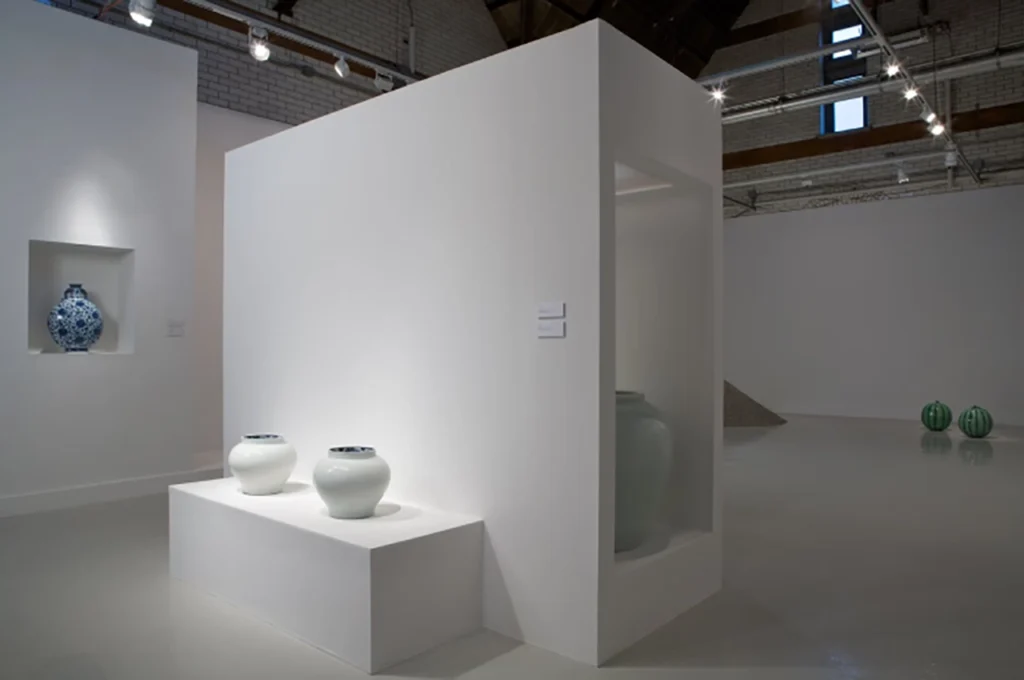
Installation view, "Ai Weiwei: Dropping the Urn," 2010, Arcadia University Art Gallery, photo: Greenhouse Media.
Featuring a selection of ceramic works and photographs ranging from 1993 to the present, “Ai Weiwei: Dropping the Urn” will offer viewers a focused look at Ai’s iconoclastic appropriations of historic clay pots and porcelain vases. The oldest pieces in the show utilize 7000-year old Neolithic urns dating from 5000 BCE*. The aura of these and other artifacts helps to define a body of work distinguished by its paradoxical investment in the Chinese ceramic vessel, a legacy whose values and significations it both questions and transcends. Ai’s focused exploration of earthenware and porcelain, begun when the artist returned to Beijing in 1993 after a decade in New York City, is critical to understanding a radical practice that has evolved to incorporate sculpture, installation, photography, video, performance, and architecture as well as curating and activism.
“Ai Weiwei: Dropping the Urn” will include examples of Ai’s unprecedented use of Neolithic and Han dynasty vessels as “readymades” that the artist subjects to a variety of procedures. These include marking 2000-year-old clay urns with hand-painted inscriptions of the “Coca-Cola” logo, dipping them into vats of industrial paint, smashing them on the ground in performances for the camera, and grinding the vessels into powder. Writing in the exhibition’s catalog essay about Ai’s “gestural practice” of defacing and destroying of these ancient objects to transform them into works of contemporary art, Beijing-based critic Philip Tinari remarks that these works provide “the illusion of clarity alongside the persistent specter of ambiguity.” What appears at first “like the sublimation of an ancient object’s financial value and cultural worth into a different yet parallel carrier of updated value and worth” also serves as a “satire of the ruling regime’s approach to its patrimony, and of contemporary China’s curious relation to its past, a situation where destruction of historical artifacts happens almost daily.”
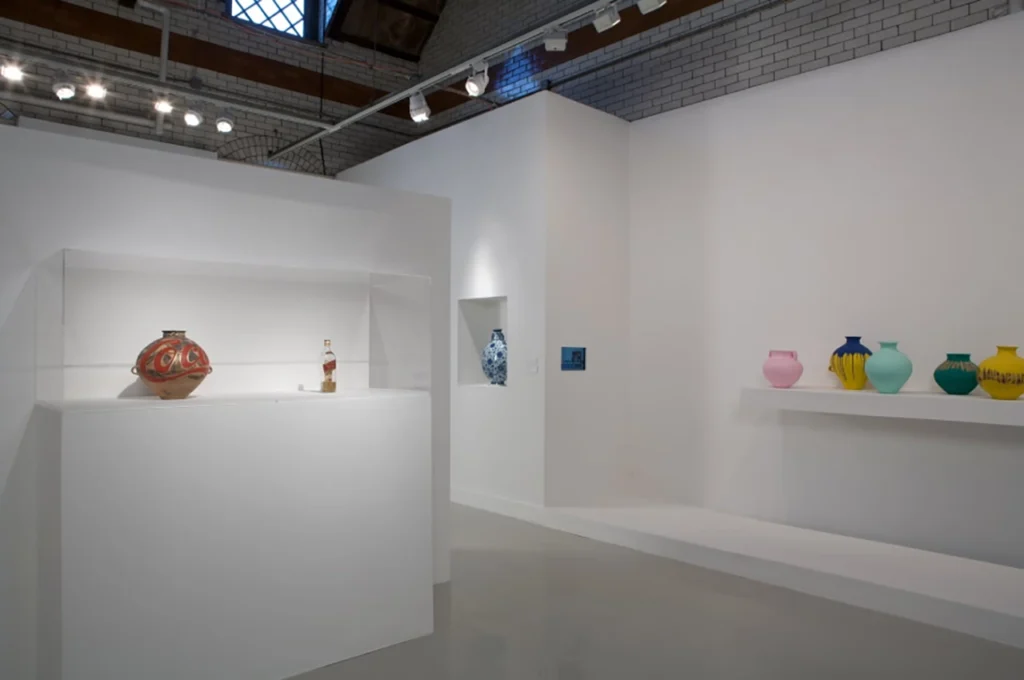
Installation view, "Ai Weiwei: Dropping the Urn," 2010, Arcadia University Art Gallery, photo: Greenhouse Media.
The exhibition will also showcase replicas appropriating Qing dynasty (18th-century) porcelain commissioned by the artist from craftsmen in the town of Jingdezhen, where porcelain has been produced for the past 1700 years. Ai’s contemporary versions of these “blue and white” flasks and jars are impossible to distinguish from the priceless originals without the aid of carbon dating, if even then, as counterfeiters often mix in flecks of old clay to foil investigators. As such, these and other “fake” works in the exhibition stand as material interrogations of authenticity and the ways in which value is constructed and perceived. Other, more recent works in the exhibition, such as a pair of spherical “watermelons”, mimic the traditional tromp-l’oeil strategy of producing glazed teapots and vases that replicate natural forms. Like many of the other works in the exhibition, they play with notions of the vessel as container vs. that which is contained while prompting questions that can broach issues of labor, class, and power. The largest piece in the exhibition, for example, appears to be a conical pile sunflower seeds, a common street snack in China. Each “seed” however, is painstakingly handcrafted from porcelain. Weighing precisely one ton, the mound’s resemblance to minimalist sculpture and the free takeaways of Felix-Gonzales Torres is contradicted by its profligate expenditure of manual effort as well as a reference to a line of communist propaganda suggesting that the Chinese people were sunflowers following Mao Zedong. As a group, the selected examples show Ai working through the dynastic progression of Chinese ceramics to reconcile the formal, material logic and historical, political commentary that give his work its unique mixture of gravity and wit.
* “Before Common Era”, a non-religious alternative to the use of B.C.
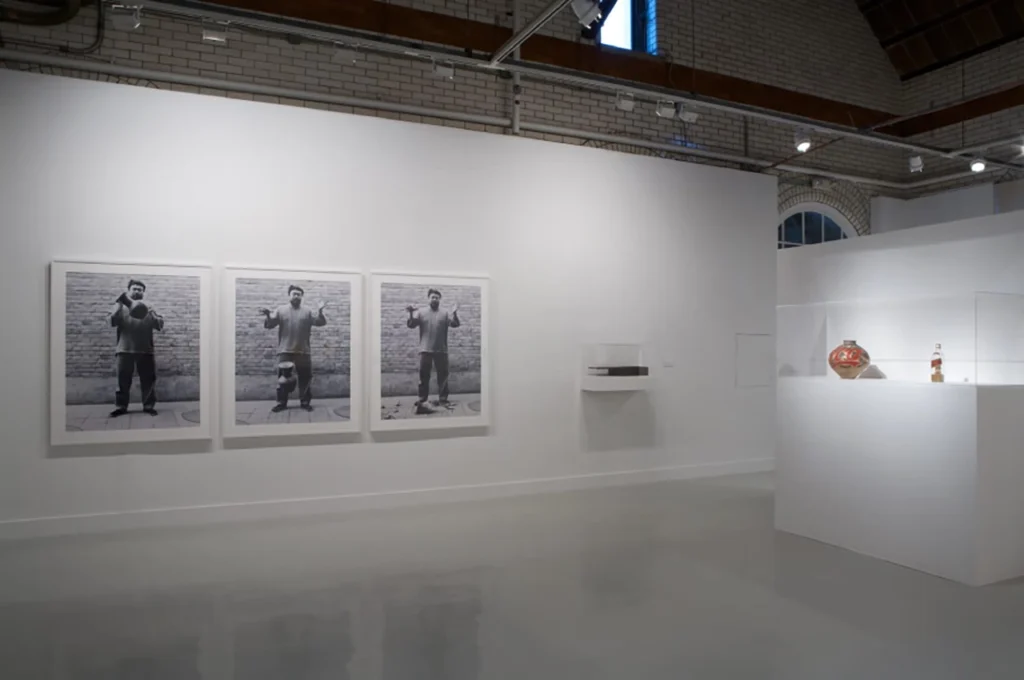
Installation view, "Ai Weiwei: Dropping the Urn," 2010, Arcadia University Art Gallery, photo: Greenhouse Media.
ABOUT AI WEIWEI
Ai Weiwei is a leading representative of contemporary art in China. Contemporary curator Karen Smith, in her essay for the Groninger Museum’s 2007 exhibition of Ai’s clay work, writes:
Ai uses what can be classified as ‘Chinese’ materials and a range of traditional and culturally specific craft practices and techniques but the artworks ‘transcend’ because he doesn’t use these things in a typical ‘Chinese way’ that was the modus operandi of the early avant-garde, and a defining element of the 1990s movements like Political Pop or Gaudy Art—or more commercially driven approaches that have emerged in recent years…He has never had recourse to specifically political motifs in his work, although his work is among the most political-oriented in all contemporary Chinese practice.
Born in Beijing in 1957, Ai Weiwei is the son of Ai Qing, a well-known Chinese poet who was denounced during the Anti-Rightist Campaign (1958-59) and subsequently banished to a labor camp in Xinjiang. During the late 1970s Ai attended the Beijing Film Academy and in 1979 exhibited his work with “the Stars” in what is widely regarded as the first exhibition of avant-garde art in post-Mao China. In 1981, Ai moved the United States where after a year in Philadelphia followed by a second in Berkeley, he settled in New York City. There he experimented with different forms of art making, including the production of sculpture from found objects, a method introduced to him by a book about Duchamp. Upon his return to Beijing in 1993, Ai became interested in classical Chinese art and grew to appreciate the skill and instincts of craftspeople that, under the influence of various imperial dynasties, had created objects whose beauty he was shocked to find in the stalls of flea markets
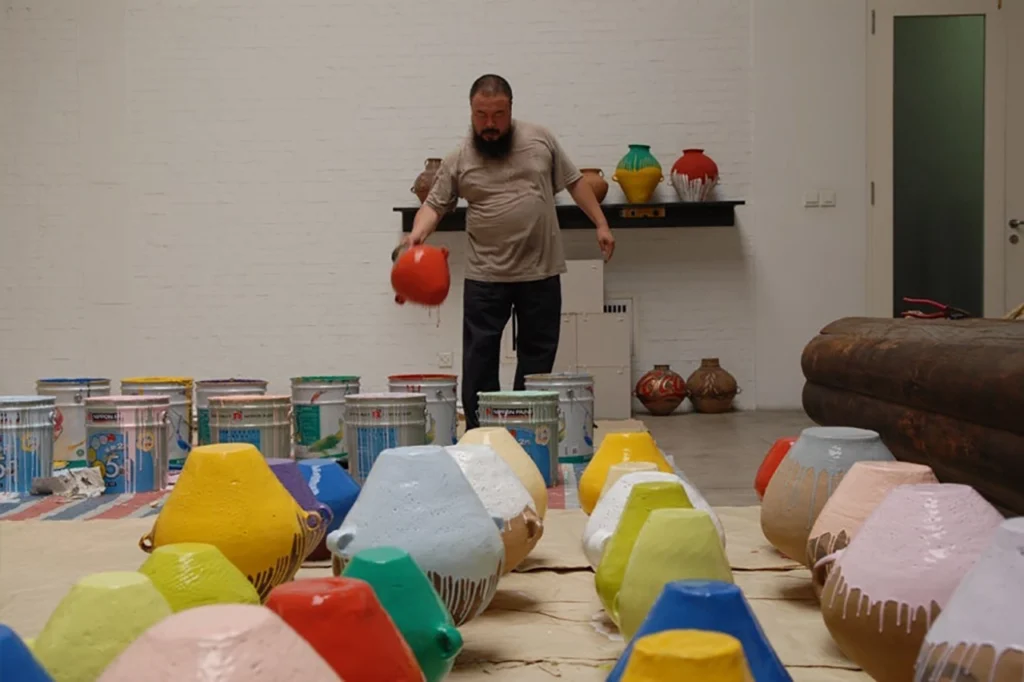
Making of Colored Vases, Ai Weiwei
In response, Ai began to research the materialistic consumer culture then emerging in China and to study the mechanisms used to construct political and national symbolism. Fusing the hands-off strategies of the Duchampian readymade and with a bias for Minimalism, Ai has developed what critic David Coggins calls a “humane conceptualism—a “cunning, humorous and ultimately compassionate form of provocation to the global scene”.
While the works that result speak universally, for Ai, the specific context of China is always the starting point. Among Ai’s most widely recognized contributions to date is Beijing’s National Olympic Stadium (2008), for which he served as a consultant to architects Herzog & de Meuron. (The design, which was proposed by Ai, originated from a study of Chinese ceramics and employs a web of steel beams intended to mask supports for a retractable roof that was never actually built but gives the structure the appearance of a bird’s nest.) Prior to the opening ceremonies of the Olympics, Ai distanced himself from nationalistic propaganda that attempted to use the stadium as a symbol. Fairytale, the first his two contributions to “Documenta 12” (2007), brought 1001 Chinese citizens to Kassel, Germany, over the course of this exhibition’s 100 days. The second, Template, was a radiating arch-like gate made of Ming Dynasty doors and windows collected from Beijing buildings razed to make room for new development. Destroyed by a powerful windstorm shortly after its installation, Template remained on view throughout the exhibition in its fallen state at Ai’s request. Despite these and other activities in a variety of media and cultural arenas (including a popular blog that has been repeatedly shut down by Chinese authorities due to Ai’s provocative writings and an ongoing attempt to collect the names of the schoolchildren who perished in the Sichuan earthquake of 2008) Ai’s fascination with ceramics and its powerful links to China’s cultural identity remains central to his work. Establishing a connection between Ai’s activism and his creative practice, Tinari’s essay for the exhibition catalog quotes the artist saying: “Duchamp had the bicycle wheel, Warhol had the image of Mao. I have a totalitarian regime. It is my readymade.”
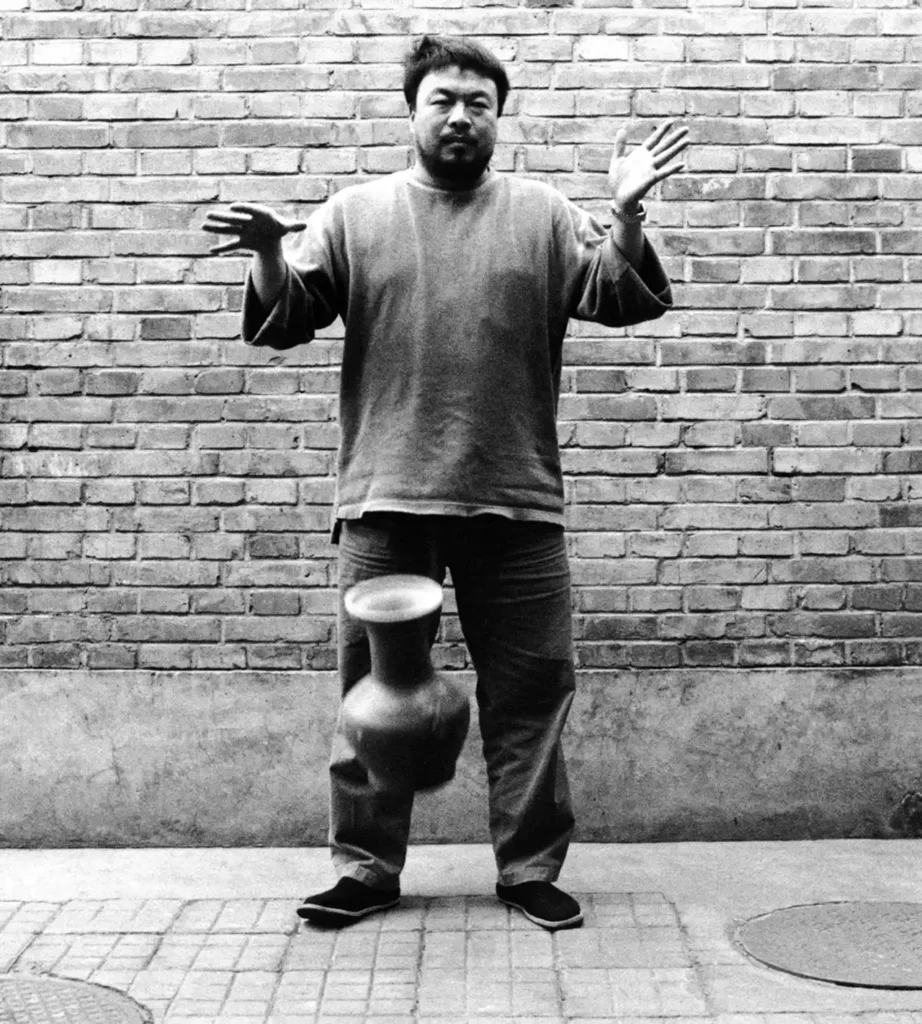
Dropping a Han-Dynasty Urn, 1995, second in a triptych of gelatin silver prints, each print 49 5/8" x 39 1/4". Courtesy private collection, USA.
EXHIBITION PUBLICATION
Overview
The exhibition will be accompanied by a fully illustrated catalog featuring four essays commissioned for the exhibition and appearing in the book both in English and in Chinese translation. In addition to a comprehensive, first-hand account of the place of ceramics within Ai’s larger multi-disciplinary practice by Philip Tinari, the book will include a text by critic Dario Gamboni (examining Ai’s strategies within the legacy of iconoclasm); an essay situating Ai’s work within the tradition of Chinese ceramics by Stacey Pierson (a noted scholar in the field), and a text by Glenn Adamson (head of graduate studies in the research department at the Victoria and Albert Museum, London) exploring Ai’s ongoing iterations of his Coca-Cola Vase. The catalog will also include the first English translation of an interview with Ai originally published in his White Cover Book (1995), the second in an influential trio of volumes that marked the re-emergence of the contemporary art scene in the mid-1990s. In addition to including material about Marcel Duchamp, these books were the first to publish images and information about the work of Jasper Johns, Jeff Koons, Jenny Holzer, and Barbara Kruger (among other contemporary American artists) in Chinese. The exhibition catalog is produced in collaboration with Office for Discourse Engineering, a Beijing-based editorial studio, and will be distributed in the U.S. by RAM Publications.
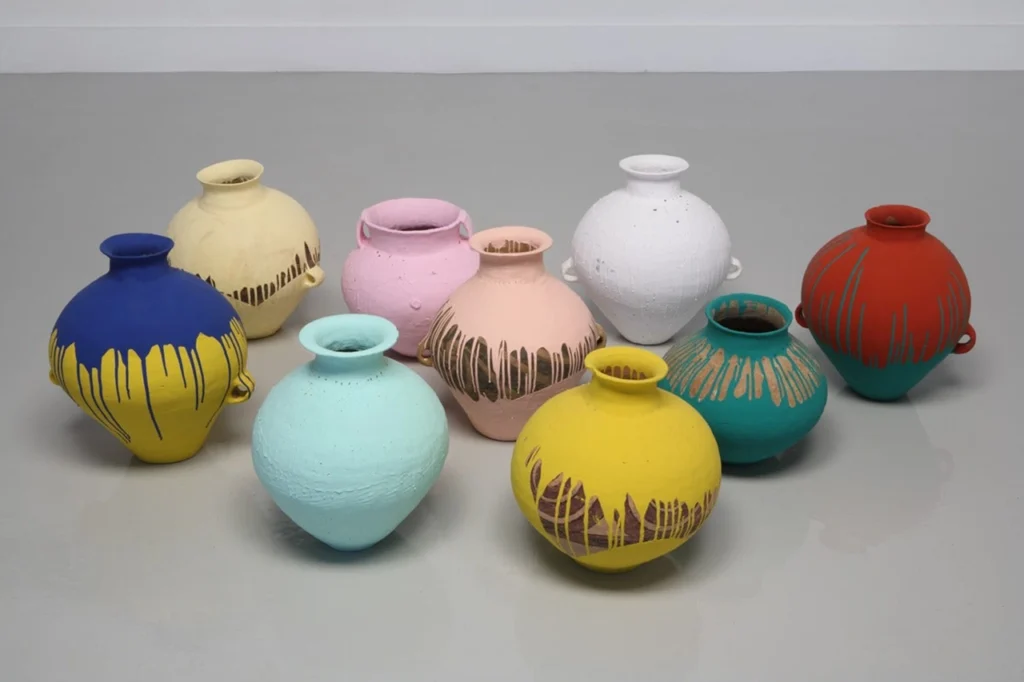
Colored Vases, 2006, vases from the Neolithic age(5000-3000BCE) and industrial paint, from between 10” x diameter 9 1/2”. Courtesy AW Asia Collection, New York.
Authors and Essay Excerpts
Philip Tinari
Tinari is founding editor of LEAP, a new bimonthly journal of contemporary Chinese art based in Beijing and published by the Modern Media Group. Since 2007, he has run the publishing imprint, editorial office, and translation studio Office for Discourse Engineering. Tinari is a contributing editor to Artforum and adjunct professor of art criticism at the China Central Academy of Fine Arts. He serves as China advisor to the international art fairs Art Basel and Art Basel Miami Beach and worked previously as academic consultant to the Chinese contemporary art department at Sotheby's. He has written and lectured widely on contemporary art in China, for publications including The Wall Street Journal, The New York Times Magazine, and Parkett. Recent projects include the book Hans Ulrich Obrist: The China Interviews (2009) and the exhibition The Hong Kong Seven, mounted by the Fondation Louis Vuitton at the Hong Kong Museum of Art last year. A native of Huntingdon Valley, Pa. and a resident of Beijing for much of the past decade, he holds an A.M. in East Asian studies from Harvard (2005), a B.A. from Duke (2001), and was Fulbright fellow at Peking University (2001-02).
Dario Gamboni
Dario Gamboni is professor of art history at the University of Geneva, after teaching at the University of Lyon-II (1991-97), at Case Western Reserve University, Cleveland (1998-2000) and at the University of Amsterdam (2001-2004). He was a member of the Institut Universitaire de France (1993-1998), Ailsa Mellon Bruce Fellow at CASVA, Washington, D.C. (1996), Meret Oppenheim Prize 2006, Paul Mellon Visiting Fellow at CASVA (2009), and Senior Research Fellow at the Henry Moore Institute (2010). He was also a guest professor at the universities of Strasbourg, Frankfurt, Buenos Aires, Freiburg im Breisgau, Mexico, Sao Paulo and Tokyo, as well as at the Ecole Normale Supérieure in Paris. He has curated and cocurated several exhibitions, most recently Une image peut en cacher une autre. Arcimboldo – Dalí – Raetz (Grand Palais, Paris, 2009). He has published many books and articles, mostly on nineteenth- and twentieth-century art, including La plume et le pinceau. Odilon Redon et la littérature (Paris 1989, revised and updated English version forthcoming, Chicago and London), The Destruction of Art: Iconoclasm and Vandalism since the French Revolution(New Haven and London 1997), and Potential Images: Ambiguity and Indeterminacy in Modern Art (London 2002). He is currently preparing a book on Paul Gauguin’s use of visual ambiguity.
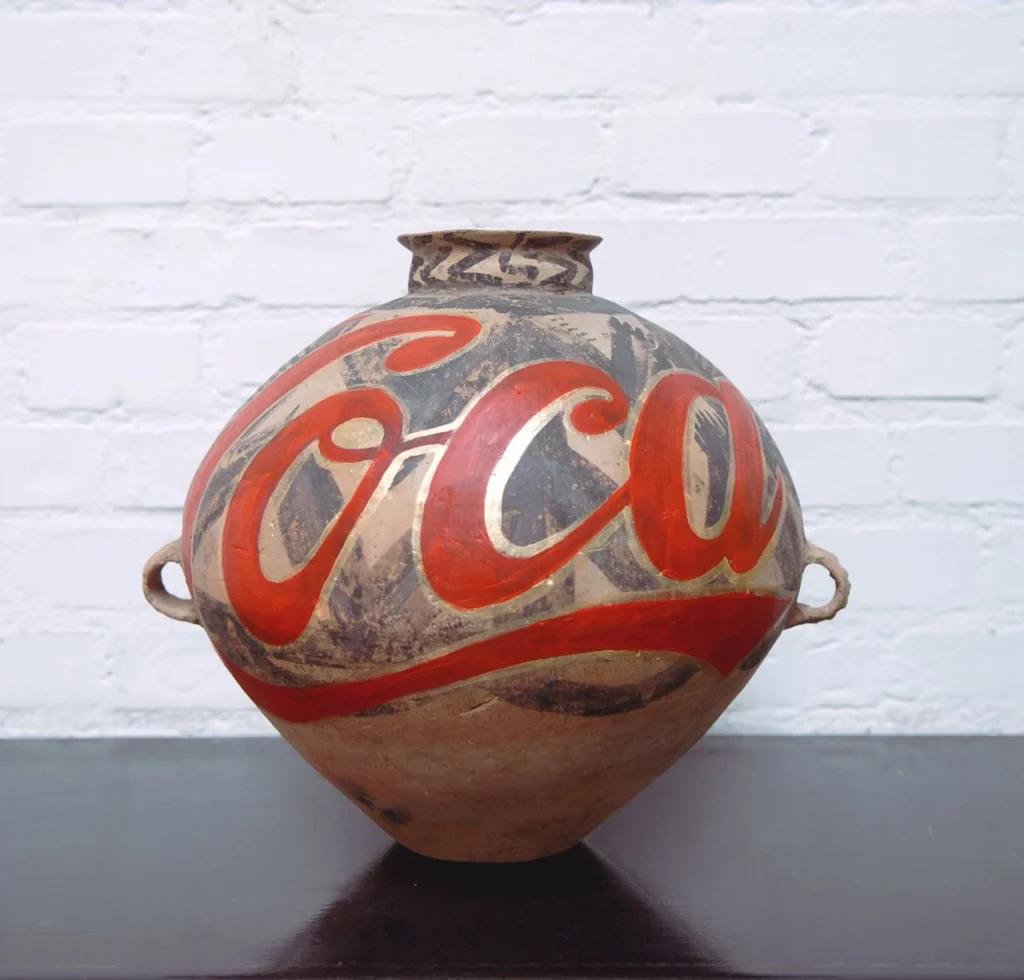
Coca-Cola Vase, 1997, vase from Neolithic Age (5000-3000 BCE), paint, 11 7/8” x diameter 13”. Courtesy Tsai Collection, New York.
Dr. Stacey Pierson
Dr. Stacey Pierson received her BA in Art History at Loyola Marymount University in 1988, her MA in Chinese Art in 1993 from the School of Oriental and African Studies, and in 2004 she earned her PhD in the History of Art from the University of Sussex. Currently Dr. Pierson is editor of the Transactions of the Oriental Ceramic Society and Assistant
Professor in Chinese Ceramics at School of Oriental and African Studies at the University of London. She has taught courses on Art and Culture in Imperial China, Asia and Africa on display: Objects, Exhibitions and Transculturation, and Ceramics in Chinese Culture: 10th-18th Centuries.
Dr. Pierson was formerly the curator of the Percival David Foundation which housed one of the finest collections of Chinese ceramics outside China and she continues to be actively involved in research and publication projects in this area. Her most recent publications include: Collectors, Collections and Museums: the Field of Chinese Ceramics in Britain, 1560-1960, Peter Lang, 2007; (ed.) “Transfer: The Influence of China on World Ceramics, Colloquies on Art and Archaeology” in Asia, no. 24, School of Oriental and African Studies, 2009 and Chinese Ceramics: A Design History, V&A Publications, 2009.
Glenn Adamson
Glenn Adamson is Deputy Head of Research and Head of Graduate Studies at the Victoria and Albert Museum, where he leads a graduate program in the History of Design. Dr. Adamson is co-editor of the triannual Journal of Modern Craft, and the author of Thinking Through Craft(Berg Publishers/V&A Publications) and a new anthology titled The Craft Reader (Berg, 2010). His other publications include Industrial Strength Design: How Brooks Stevens Shaped Your World (MIT Press), and Gord Peteran: Furniture Meets Its Maker(Milwaukee Art Museum). Presently he is working on an exhibition about Postmodernism, to be held at the V&A in 2011.
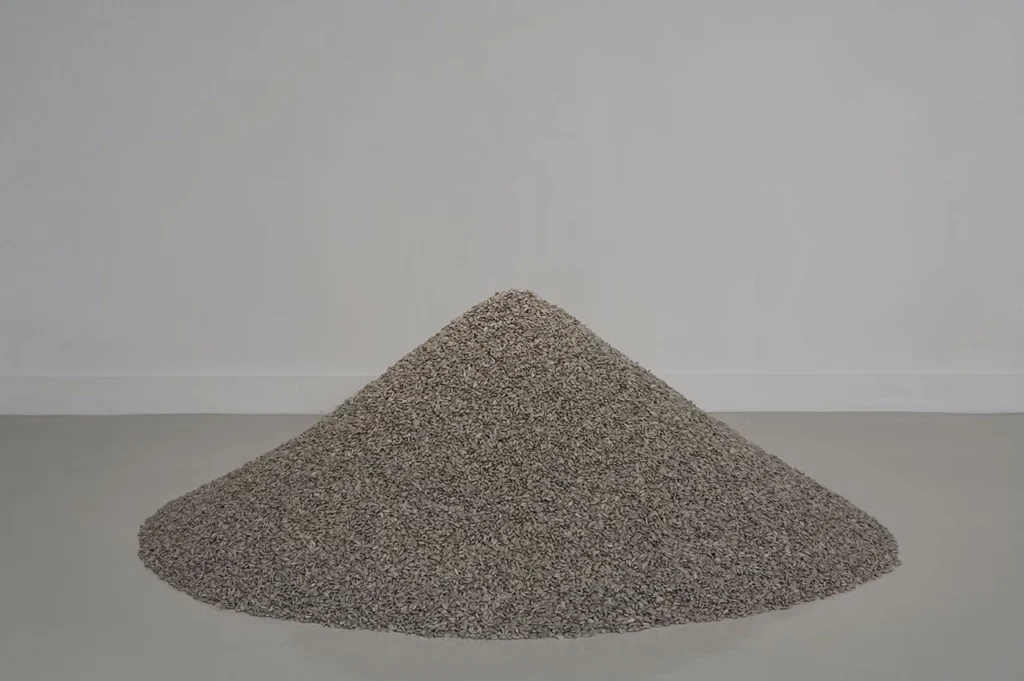
Untitled, 2006, porcelain, 1 ton, diameter approximately 80”. Courtesy Ai Weiwei, Beijing.
Student Biennial
January 28 – February 7, 2010
January 28 – February 7, 2010