Explore Housing Options at Arcadia

Take a Video Tour
Accommodation Requests
Arcadia housing can accommodate many unique student needs to help students with physical, psychological, or cognitive challenges identify a housing option that suits them best. If you’d like to request special housing accommodations, please visit our accommodation requests page.
Frequently Asked Questions
Housing Process and Assignments
How does Arcadia assign housing?
Housing is based on the type of experience you prefer, such as living in the Castle, a Theme Community, or a specific hall style. Arcadia looks first at your housing experience preferences, not when you submitted your deposit or application. If two students select the same housing experience, they are more likely to be placed together. Different preferences make a roommate match less likely.
What are the housing application deadlines?
Returning students: March 25, 2026
Incoming students: May 1, 2026 (no later than June 3, 2026, the priority housing deadline)
Students who need medical accommodations receive priority placement and should submit documentation early.
How do I find a roommate?
After completing your housing application, you will create a housing profile with a roommate-matching questionnaire. The system will show you percentage matches for potential roommates. If you want to live with a specific person, you can search for them in the housing portal once they have also completed their application.
Can my housing or roommate assignment change?
Residence Life makes every effort to match you with your preferred housing experience, but changes may occur due to space limits, student needs, or updated information.
Residence Hall Spaces and Amenities
How big are the rooms?
- Dilworth, Heinz, and Kistler: about 11 × 14 feet
- Thomas: about 11 × 13 feet
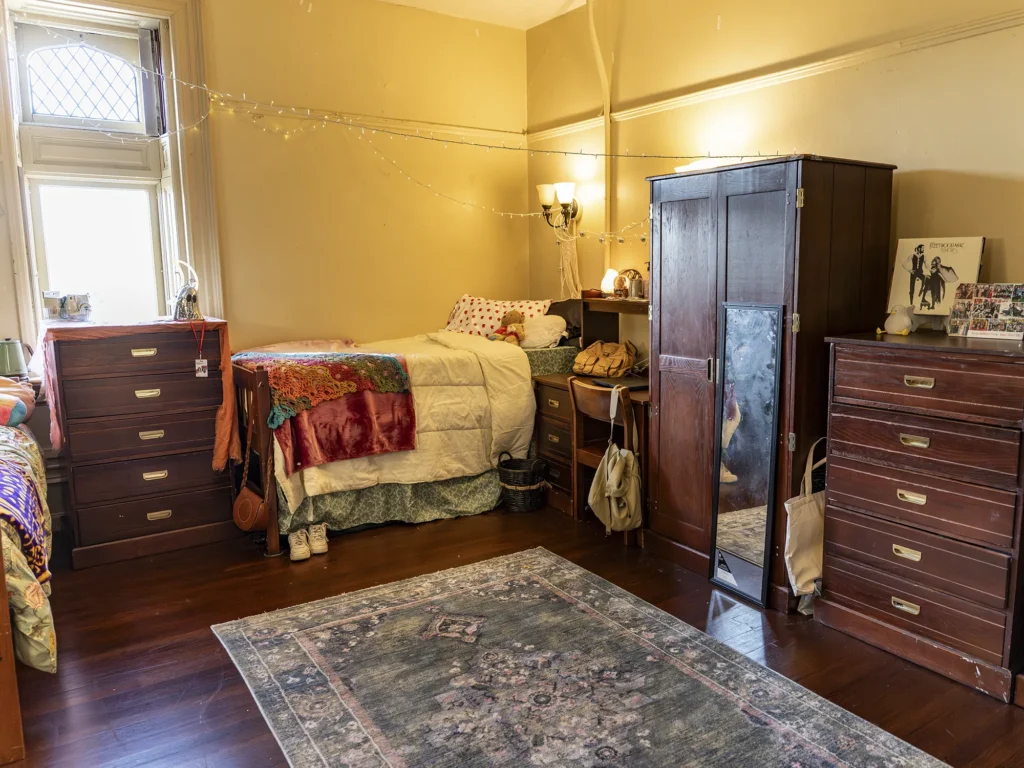
- Grey Towers Castle: room sizes vary.
What furniture is provided?
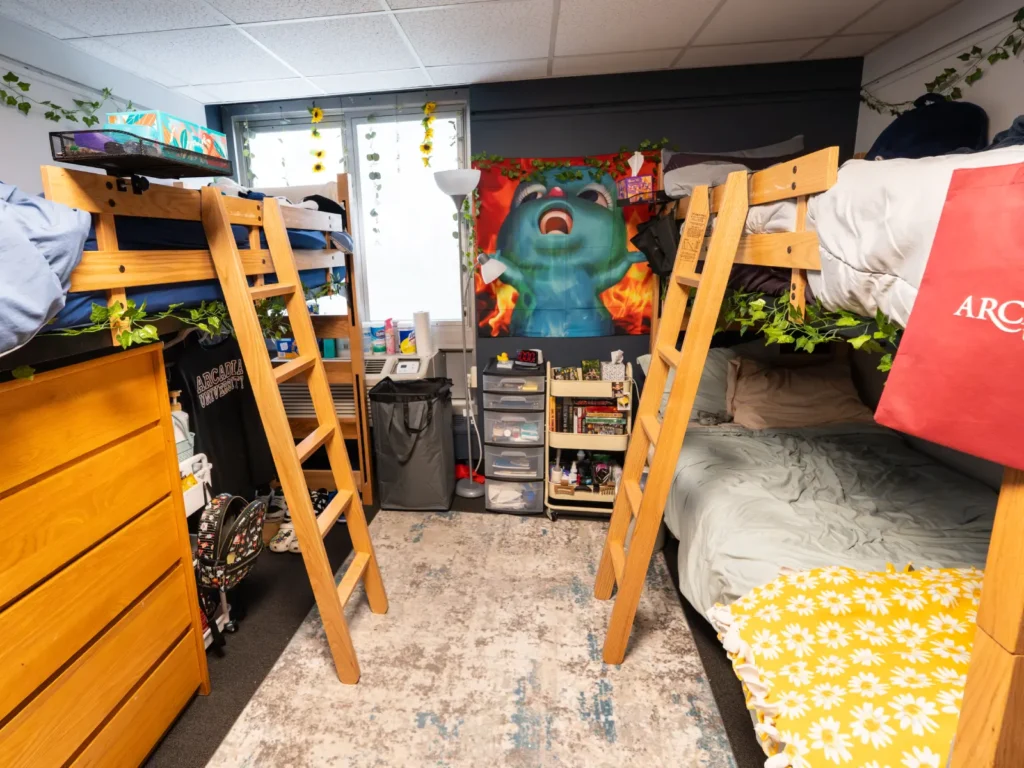
Each traditional residence hall room includes a bed frame and mattress, desk and chair, dresser, and closet space. Triples include one lofted bed and one bunk bed set with ladders and guards. All original furniture must stay in the room, even if a roommate moves out. All beds are extra-long twin (36″ × 80″).
What amenities are in the halls?
Each building offers high-speed Wi-Fi and Ethernet (device registration required), free laundry, study and lounge spaces, and vending machines. Some lounges also have TVs, pool tables, or foosball tables. Housekeeping cleans community lounges and bathrooms.
What kitchen access do students have?
Traditional halls have shared microwaves located throughout the building. Knight Hall has a kitchen on each floor where students can cook using their own supplies. Apartments have full kitchens with refrigerators, stoves, and ovens, and most also have dishwashers. Students must bring their own cookware and microwave if desired.
What extra furniture is in suites and apartments?
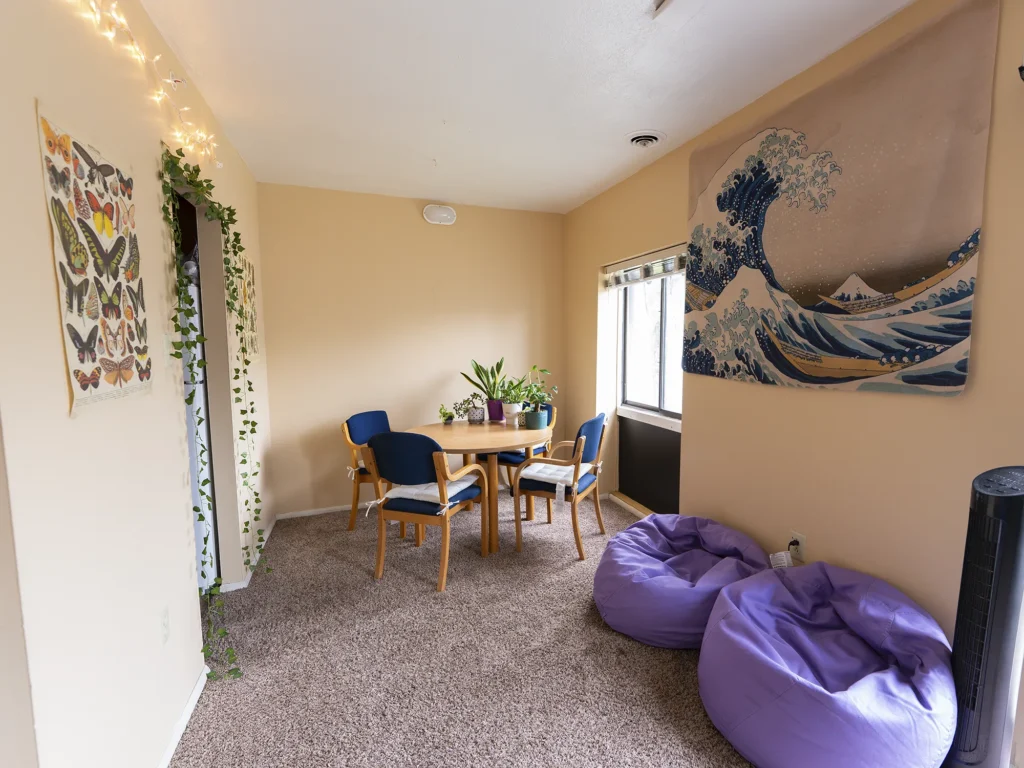
Knight Hall suites include living room furniture such as loveseats, sofas, and coffee tables. Apartments have a dining table and chairs, along with a sofa, loveseat, and tables in the living room.
What are the bathrooms like?
Traditional halls (Kistler, Thomas, Dilworth, and Heinz) have community bathrooms cleaned and stocked daily by housekeeping. Knight Hall suites have private bathrooms that residents clean themselves. Apartments have one or two bathrooms, and residents are responsible for cleaning and stocking them.
Living on Campus
What should I bring to campus?
Bring twin XL bedding, pillows, towels, a shower caddy and flip-flops, an alarm clock, fan, storage bins, a power strip with surge protection, a trash can, laundry supplies, cleaning wipes, hand sanitizer, a thermometer, and any small kitchen or personal items you’ll need. Decorations are welcome as long as they are hung with removable adhesive.
What should I leave at home?
Do not bring alcohol (if under 21), air conditioners, toaster ovens, space heaters, grills, pets (except fish up to 10 gallons), extension cords, halogen lamps without covers, candles, incense, large refrigerators, unapproved microwaves, coffee makers without automatic shut-off, or anything with an exposed heating element.
Does Arcadia partner with any vendors for room items?
Yes. Arcadia partners with Campus Specialties Inc. (CSI) for microwave and refrigerator rentals. CSI units are the only microwaves approved in traditional residence halls. Microwaves are not permitted in the Castle. A portion of all sales supports student programs on campus.
Are my belongings insured?
Arcadia University does not cover personal belongings. You should make sure your items are covered by homeowner’s or renter’s insurance.
What if I do not get along with my roommate?
Talk with your Resident Assistant first. They can help you and your roommate communicate and find a solution. If a room change becomes necessary, you will meet with your Residence Life Coordinator. Room changes begin after the third week of the semester, based on available space.
Do the residence halls close during breaks?
Yes. The halls close during Thanksgiving, winter, and spring breaks. Students who need to stay on campus may request a break exception for an additional charge.
Are the residence halls co-ed?
Most residence halls are co-ed by floor or wing. Knight Hall suites and Oak Summit apartments may offer co-ed housing by bed, available by request.
Is gender-inclusive housing available?
Yes. Arcadia offers gender-inclusive housing for students who want an inclusive and welcoming living environment. For more information, contact housing@arcadia.edu or 215-572-4026.
Mail, Policies, and Expectations
What is my campus mailing address?
[Your Full Name] – STUDENT
Arcadia University
450 South Easton Road
Glenside, PA 19038
What policies apply to living in residence halls?
All residents are expected to follow the Knight Code of Honor, the Code of Conduct, and the University Housing Agreement. You’ll review and agree to these policies when completing your housing application.
Where can I park on campus and how much does it cost?
Parking at Arcadia is managed by the Office of Public Safety and is available to students, faculty, staff, and visitors. First-year resident students are generally not permitted to bring cars to campus, with limited exceptions for medical needs, athletic travel, or employment (approval required). Parking permits are available for full or half years, with associated fees.

