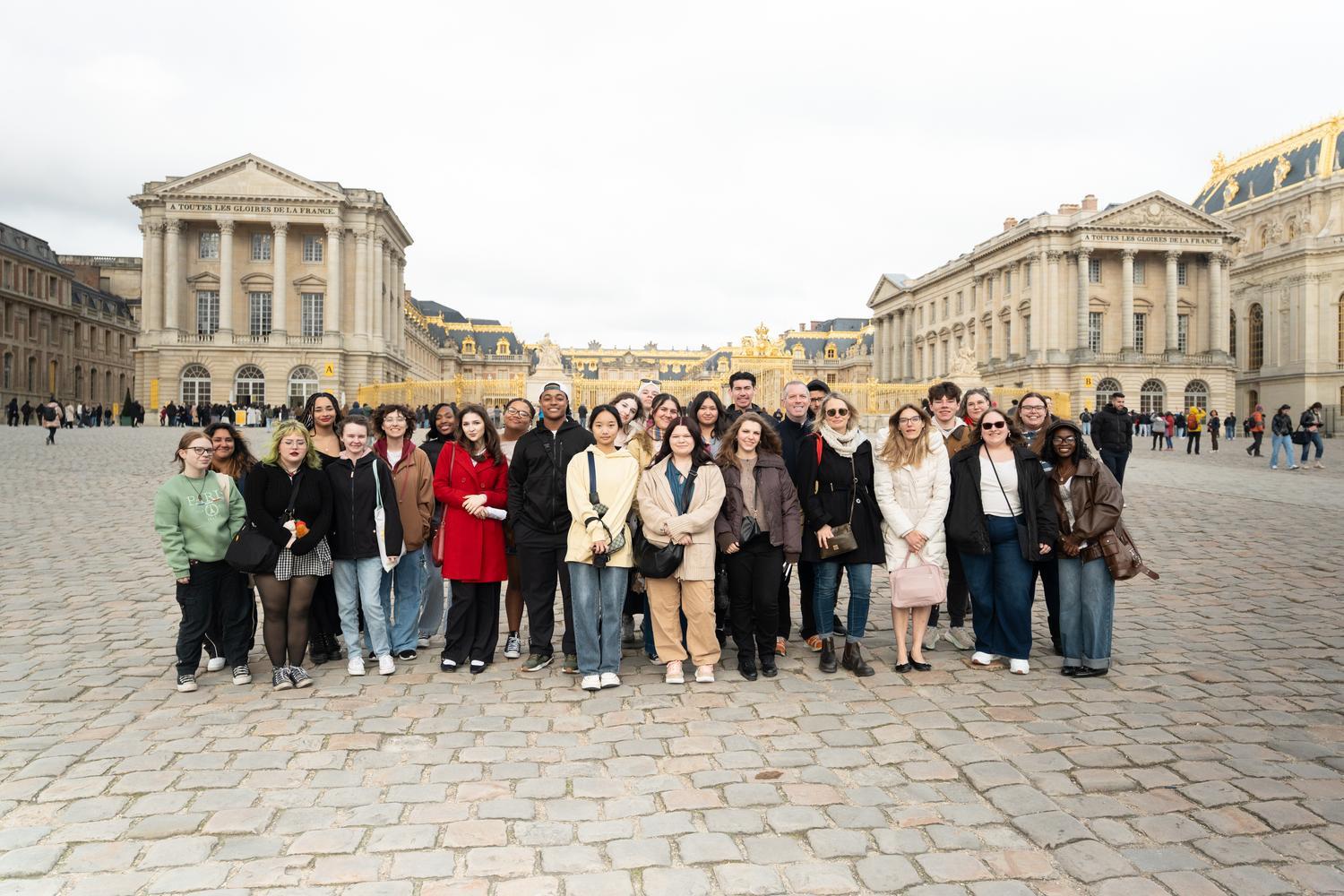
A Global Experience Built Into Your First Year
Preview the World is a 2-credit spring course for first-year and new transfer students that combines classroom learning on Arcadia’s Glenside campus with international travel during spring break. Taught by Arcadia faculty, the program allows students to explore global themes alongside classmates while earning academic credit. This is a unique and exclusive experience at Arcadia University that you can’t get anywhere else!
With multiple course options available, Preview the World reflects Arcadia’s leadership in global education—ranked first for participation in the nation for study abroad. To expand access, Arcadia helps pay for all student travel, and students who receive Pell Grants don’t pay any travel fees at all.
*Institute of International Education’s Open Doors Report
**U.S. News & World Report
Spring 2026 Preview Offerings
Explore the full list of course options below. When you apply, you’ll be asked to indicate your top four preferences.
BBQ: America’s Favorite Cuisine - Austin, Texas (USA)
Instructor: Marc Brasof
Meeting Time: Friday 2.45 - 4.45
Description: Studying the intersection of food and culture involves analyzing how food practices and traditions are deeply intertwined with a community's cultural identity, history, social structures, and geography. We will examine barbecue as a ‘foodway’ to understand the social contexts that make it such important cuisine in the United States (and elsewhere)—for BBQ is truly communal and inseparable from the American experience. In this course we will not only explore the whys of BBQ; as a group, we will learn how to cook it—students will have an opportunity to become novice pitmasters and/or certified to run a restaurant, culminating in a BBQ cookout for the university! Additionally, we will explore the music and food-rich city of Austin, Texas during the travel portion of the course, which has become one of the most important and diverse centers of BBQ in the world. There, we can explore diversity of food and culture that makes BBQ such a culturally adaptive cuisine.
Sustainability and Spirituality in Bali Indonesia - Bali, Indonesia
Instructor: Jennifer Riggan
Meeting Time: Thursdays 4:00 - 6:00 p.m.
Description: This course examines the intersection of sustainable tourism and spiritual practice from the perspective of Bali, an island in Indonesia. Sustainability is a major global challenge for human societies. Bali is a perfect-fit to explore themes in sustainability because it is at a critical turning point in its development: trying to balance tradition and modernity, cultural sustainability and economic advancement. Principles of Balinese spirituality provide an alternative way of thinking about spirituality. During our course, Bali is our “living classroom” where we examine the ways that individual, community, and environmental well-being are intertwined and connected to global economies and local ecologies. The centerpiece of this year’s course will focus on the unique cultural practices of the Balinese New Year (Nyepi). Known as the “day of silence” during Nyepi, there is no music, transportation and people do not leave their houses in order to engage in silent contemplation. Learning about and practicing this form of spirituality alongside the Balinese people, will radically reorient students’ understandings of what it means to be a tourist. We will also explore Bali’s unique approach to sustainability through interactions with the island’s NGOs and cultural organizations. Students also visit revered Balinese temples, explore sustainability in a national park, snorkeling over coral restoration sites, and speaking with a member of the Balinese royal family.
Cultura y Comida: Food Culture in Barcelona - Barcelona, Spain
Instructors: Ashley Knueppel & Cheryl Lewis
Meeting Time: Tuesdays 4:00 - 6:00 p.m.
Description: “Food is of and from a place; it needs a context to give it authenticity.” - food and wine authority, Colman Andrews
Food plays a crucial role in cultural identity; it is one of the strongest identifiers of place and home. In this sense, it is also an excellent way to learn about and truly experience a culture through every sense. Barcelona has a rich history and connection to food and is globally recognized for its bustling food scene.
The course takes students on a deep dive into Barcelona food which has been influenced by its history and culture. Together we will experience how cuisine, cooking, eating and food-related practices, traditions and rituals can be used as vehicles for understanding a culture and society - especially in a globalized world. We will treat the classroom like a dinner table - a place to come together and foster discussion with respect. Topics to be covered include a basic history of Barcelona and representative foods; the effects of colonization, immigration and ethnic enclaves; cultural identity and food rituals; social and environmental responsibility and sustainability efforts; and food tourism.
We’ll put this learning into action with our Preview travel week itinerary. Highlights include: multiple walking tours, tapas tasting, cooking class, vineyard and farm visits, market tours, and a visit to the iconic Sagrada Familia Basilica.
Ecotourism & Sustainable Development in Costa Rica - Costa Rica
Instructors: Ryan Genova & Charlene Bauer
Meeting Time: Wednesdays 2.45 - 4.45 p.m.
Description: This course will explore the image of Costa Rica as a leader in the global ecotourism community. As Costa Rican tourism of all kinds has significantly increased over the past two decades, surrounding controversy has begged the questions: Is de facto ecotourism a sustainable practice, and can conservation and economic growth truly go hand in hand? We will focus on the role and polices of the Costa Rican government in managing the private sector, protecting the country’s biodiversity and natural lands, and its historical responses to criticisms levied by environmentalists. We will have the opportunity to learn from local sources, participate in sustainable practices related to Costa Rica’s ecosystem and local population, and visit some of the northern region’s most exotic landscapes. Students will depart San Jose with an increased awareness of natural preservation, the growing demands of the tourism industry, and the cultural integrity of the local community.
Dark Dublin: Exploring Ghost Criminology and Dark Tourism in Dublin - Dublin, Ireland
Instructors: Favian Martin & Anthony Reyes
Meeting Time: Mondays 2:45-4:45 p.m.
Description: Step into the shadows of Dublin—a city where every cobblestone seems to whisper stories of rebellion, tragedy, and the supernatural. This immersive course invites students to explore the booming world of dark tourism through the lens of Ghost Criminology, Irish history, and literature. Together, we’ll investigate how stories of death, violence, and trauma are retold, commodified, and reimagined in the modern world. From 19th-century grave robbers and cadaver trafficking to the ghosts of Kilmainham Gaol and the fiery legend of Darkey Kelly—Ireland’s infamous alleged witch and first female serial killer—students will dive deep into the city’s macabre past. We'll also examine pivotal moments like the 1916 Easter Rising and consider how personal, political, and cultural forces shape what is remembered—and what is forgotten.
Grounded in cultural criminology, this course offers a unique opportunity to deconstruct the ethics and impact of telling dark stories. Through readings, discussions, and real-world site visits, students will analyze how history, myth, and marketing converge in the rise of dark tourism.
As the highlight of the course, students will travel to Dublin, where they’ll explore iconic and eerie landmarks including Kilmainham Gaol, Glasnevin Cemetery, the vaults of St. Michan’s Church, the GPO Museum, and Dublin Castle. The experience culminates with a guided ghost tour of the city, offering firsthand insight into how these haunted narratives are brought to life for modern audiences. Whether you’re passionate about crime, history, folklore, or cultural storytelling, this course offers an unforgettable journey into the haunted heart of Ireland.
Wherever Green is Worn: Modern Ireland Through History and Tradition - Dublin, Ireland
Instructor: Tim Barton
Meeting Time: Fridays 2:45-4:45 p.m.
Description: While the whispers of ancient stone walls and the warmth of friendly faces certainly endure, Ireland is much more than a postcard of rolling green fields and ancient lore. Modern Ireland is a vibrant tapestry woven from tradition and exhilarating transformation. This course invites you on an unforgettable journey to uncover what it truly means to be Irish today, showcasing the captivating interplay between its pulsating urban centers and the timeless serenity of its inspiring countryside. We'll trace Ireland's compelling journey from its mythical Celtic origins, plunge into the rich literary heart in its capital city, and confront the continuing, vital narrative of Northern Ireland. Prepare for an utterly immersive experience: stroll the historic, bustling streets of Dublin, breathe in the salty air of a picturesque coastal village, step inside the very halls of the Irish Parliament, explore the resilient spirit of Derry, and find reflective solace amidst timeless Celtic ruins nestled deep within the Irish countryside. Join us to discover firsthand why this small, powerful island doesn't just hold history, but actively captivates the hearts and minds of 80 million people across the globe.
Hard Men: Deconstructing Scottish Masculinity - Edinburgh, Scotland
Instructors: Daniel Pieczkolon & Jess Derr
Meeting Time: Fridays 2:45-4:45 p.m.
Description: For decades, Sociologists have been reminding us that “gender is a social construct,” but how do different societies construct gender differently? How do factors like geography, economics, cultural history & representation, and so many more combine to inform our (mis)understanding of gender? This course provides students the opportunity to examine the cultural stereotype of the “Scottish Hardman” in contemporary Scottish fiction in an attempt to understand its root causes & material effects. To help us better understand the fiction, we will use academic essays, short films, personal reflection/refraction, classroom discussion, and experiential learning (in Edinburgh & Glasgow) to explore how masculinity reproduces itself—often to the detriment of other genders, society at large, and even those who benefit from it in some capacity.
Ciao! STEM innovations and culture in Florence, Italy - Florence, Italy
Instructors: Dr. Augusto Macalalag & Dr. Kim Dean
Meeting Time: Fridays 2:45-4:45 p.m.
Description: The city of Philadelphia played a pivotal role in shaping the development of a new democracy, while the city of Florence played a role in the initiation of the Italian Renaissance. Both cities are steeped in scientific discovery and the advancement of their respective countries. In this course, students identify and examine the scientific pioneers, their discoveries and developments, and how the local culture and society fostered their work. Student participation in a variety of discussions and field explorations in Philadelphia, Pennsylvania and Florence, Italy introduces them to the interplay of science, society, and culture of two historic and well-known cities. Examples of field study include Brunelleschi’s discovery of linear perspective and its use in art, the invention of mechanical devices for building construction and used in erecting the dome of the Florence cathedral, Leonardo da Vinci’s machines, Benjamin Franklin Museum visitation, Benjamin Franklin’s many inventions such as the lightning rod for safety, and Galileo’s discovery of the Laws of Motion and his development and use of the telescope to advance astronomy. Students will also explore the societal and political contributions of Benjamin Franklin and the Medici Family in the technological advances made during the Italian Renaissance and Colonial America. Finally, this course will examine the scientific triumphs of Philadelphia and Florence, but also encourages students to explore who benefited, who was excluded, and how these advancements intersected with social justice issues of the time. By examining the power dynamics, marginalized voices, and lasting impacts, students gain a richer understanding of science within its historical context.
Lost & Found: How EcoArts Reconnect Us to the World - Glasgow and Edinburgh, Scotland
Instructors: Ellen Skilton & Monica Day
Meeting Time: Thursdays 4:00 -5:45 p.m.
Description: Explore Scotland’s rural countryside and two of its most important cities using art, and especially EcoArt, as a lens to engage in possibilities for engaging with current realities and imagining different futures. We will get up close with rivers in both Philadelphia and Scotland and explore race and class dynamics in arts and climate justice across contexts. Designed for artists and non-artists alike, this course explores the role of art and imagination in addressing climate change. Students begin by responding visually and in words to their own relationship with nature, developing a deeper understanding of the connections between themselves and their environment, and learning new ways to express this connection and generate awareness, commitment and momentum for the climate conversation. Alongside their personal exploration and creative responses, students will engage with environmental art, artists, and city planners from around the world, and with movements such as EcoArt and Biomimicry. We will connect our own interests and creativity with community artists and projects in the Scottish Borders, Glasgow, and Philadelphia as a way of mapping our collective way forward.
Iceland: The Land of Fire and Ice - Reykjavík, Iceland
Instructors: Kim Small & Tatjana Miletic
Meeting Time: Fridays 2:45-4:45 p.m.
Description: Discover the unique natural and cultural landscape of Iceland, where geological wonders, historical heritage, and artistic experiences come together. Iceland was settled around 870 AD by Norse and Celtic populations, making it one of Europe’s last inhabited islands. First recorded by Viking explorers in the 9th century, it became a Norwegian province in the 13th century and later came under Danish rule. Iceland gradually gained autonomy in the 19th century, declaring itself an independent republic in 1944. Reykjavik, the lively capital city powered by geothermal energy, is home to museums that celebrate and preserve the nation’s rich Viking history. Beyond the city, Iceland’s breathtaking scenery unfolds — a dramatic landscape shaped by volcanoes, geysers, hot springs, glaciers, black sand beaches, and expansive lava fields.
Germany: Gorgeous & Grimm - Munich, Germany
Instructors: Rhianon Visinsky & Allyson McCreery
Meeting Time: Fridays 2:45-4:45 p.m.
Description: This Preview will examine the literary, architectural, and landscape intricacies of the region of Bavaria in southern Germany. We will explore the “Gorgeous & Grimm”--the stunning architecture and landscape that inspires many of the fairy tales shared by the Brothers Grimm. The experiential learning component of this course will explore the storied landscape of Germany as it offers unique insight into the ways that landscape and architecture influence fairy tales and allow us to create, modify, and commodify them for our own purposes of education and enjoyment.
Empire’s Echo - London, England
Instructors: Alisha Divis & Bre Donnelly
Meeting Time: Thursdays 4:00 - 6:00 p.m.
Description: Once arguably the “mightiest” Empire of them all, the legacy of the British Empire includes wide ranging implications on what it feels to truly belong to one’s society and culture. British imperialism fundamentally altered the demographic and cultural landscape of London. The influx of people from the colonies and former imperial territories into London created a diverse and multicultural city. However, alongside this diversity, there were also divisions and tensions based on race, class, and nationality. The experience of living in imperial London influenced individuals' identity development in profound ways. As a class, we will work together to better understand the complexities of British society and culture, spanning historical events, social movements, and contemporary issues. The course encourages critical thinking, cultural awareness, and a deeper appreciation for the diverse narratives that contribute to the fabric of British identity. Our adventure together in London, will allow us to discover the real city outside of the square mile to learn the very different story that neighborhoods tell about history, identity, and the mirage of the crown.
Rhythm & Culture: Exploring Music and the Arts in London & Philadelphia - London, England
Instructor: Stephen Tyson Jr., Ed.D.
Meeting Time: Mondays 4:00-6:00 p.m.
Description: How do Philadelphia and London support local arts and culture? What does it mean to pursue a career in music, dance, film, painting, fashion, and other types of art in these cities?
In this course, we will meet various creative artists and professionals in Philadelphia and London, exploring how they are supported by the local community, how they brand and market themselves as creatives, and how they use their artistic talents for self-expression.
In both cities, our class will attend live events and visit various places related to the music and arts scenes (e.g., recording studios, concert halls, record stores, record labels, etc.). Guest speakers with expertise in the Philadelphia and London creative arts scenes will discuss their work and experiences with our class.
Throughout the course, students will be expected to journal what they learn from readings, assignments, guest speakers, and study abroad, to compare Philadelphia and London's music and arts community. These journal entries will form the basis for final presentations, which will be shared at Global Expo.
Paris: A City of Insiders and Outsiders - Paris, France
Instructors: Kate Bonin & Matthew Heitzman
Meeting Time: Fridays 2:45 - 4:45 p.m.
Description: The city of Paris has been profoundly shaped by the powerful, the privileged, and the talented people who have inhabited it: from its kings, emperors and presidents; to brilliant engineers and technocrats such as Baron Haussmann and Gustave Eiffel; to groundbreaking artists and intellectuals such as Jean-Paul Sartre and Simone de Beauvoir. Over the course of the semester, and during our week-long stay in Paris, we will seek to understand the physical, political, economic and cultural structures of French civilization through our study of Parisian “insiders” and “outsiders.” As our investigations will show, these categories themselves are unstable, and liable to sudden reversals: such as Louis XIV, the absolute monarch who deliberately consolidated his power outside the city limits; or Maximilien Robespierre, one of the architects of the French Revolution, who was himself overthrown and guillotined; or the African-American authors, artists, and entertainers of the 1920s and 30s who left behind their marginalized status in the United States to make their home in the City of Lights. Each student enrolled in the course will choose a different “insider” or “outsider” (whether a leader of government, a revolutionary, an artist, musician, inventor, technocrat, financier, philosopher, or a criminal) as a focus of study.
Our course will also look each week at a short piece of travel writing about Paris. We’ll use these travel texts to think about the ways in which travelers are also always both “insiders” and “outsiders” in relation to Paris, French culture, and the French people. We’ll look at how other travelers have negotiated this dynamic, finding ways to connect to the local culture, but also recognizing the ways in which they are still distant from it. This will help us to prepare for and process our own travel experience to Paris.
Tradition, Mythology and Modernity: Sicily Today - Sicily, Italy
Instructors: Dr. Michelle Reale & Jon Drucker
Meeting Time: Fridays 2:45 - 4:45 p.m.
Description: Preview to Sicily will examine this enigmatic island from tradition to modernity, touching on the various aspects of Sicilian culture both well known and more obscure. We will look at the culture through various lenses’, such as religion, mythology, food, family, the Mafia and Italian stereotypes, to excavate the myriad aspects of a culture that has survived despite the many invasions the island has weathered!
Seoul South Korea: Cultural Explorations - Seoul, South Korea
Instructors: Logan Fields & Juan Duque
Meeting Time: Fridays 2:45 - 4:45 p.m.
Description: This course explores how people experience the world differently depending on where and how they grow up, focusing on key differences between Western (more individual-focused) and Eastern (more community-focused) cultures. We'll look at how culture, environment, and society shape the way we see ourselves and others, using a mix of theory, research, and personal reflection. A big part of the course is understanding how our senses, like sight and sound, affect how we make sense of the world around us. We'll study how different cultures express and experience the world through their senses, including art, music, and everyday life.
The highlight of the course is an unforgettable trip to Seoul, South Korea, where you'll have the chance to experience Eastern culture firsthand. Through museum visits, cultural events, and hands-on workshops, you'll deepen your understanding of the material while building your cross-cultural awareness and critical thinking skills. This course is designed to challenge your assumptions, broaden your worldview, and help you engage more thoughtfully with our globally connected society.
Preview the World Timeline

Summer
Apply for Passport
-
Over the Summer, apply for your passport.
-
Complete Form DS-11, gather proof of citizenship and ID, provide a passport photo, pay the fee, and apply in person at an authorized passport acceptance facility.
September
Explore Options & Apply
-
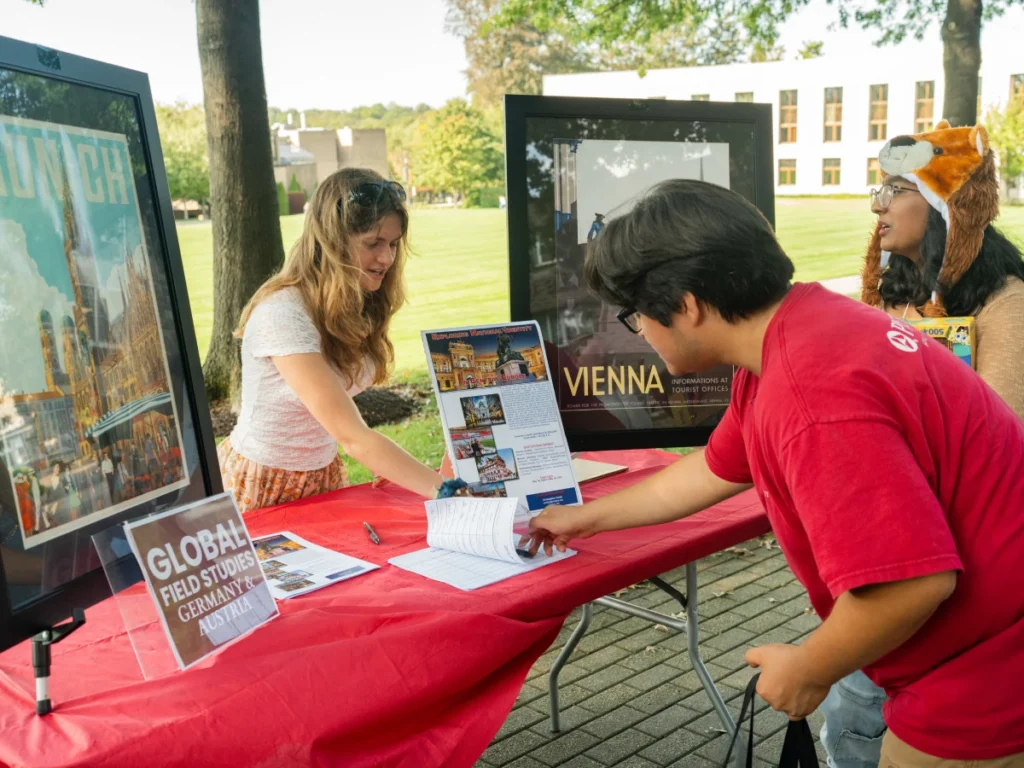
Mid-September: Visit the Study Abroad Fair to meet faculty, explore courses, and find the program that fits you.
-
Applications open shortly after the fair. Learn about the process.
October
Acceptance & Documents
-
Course placements are shared in mid-October.
-
November 1st: Official deadline for all checklist items (Passport, Wellness Form, Preview travel fee).
January & February
Learn & Build Community
-
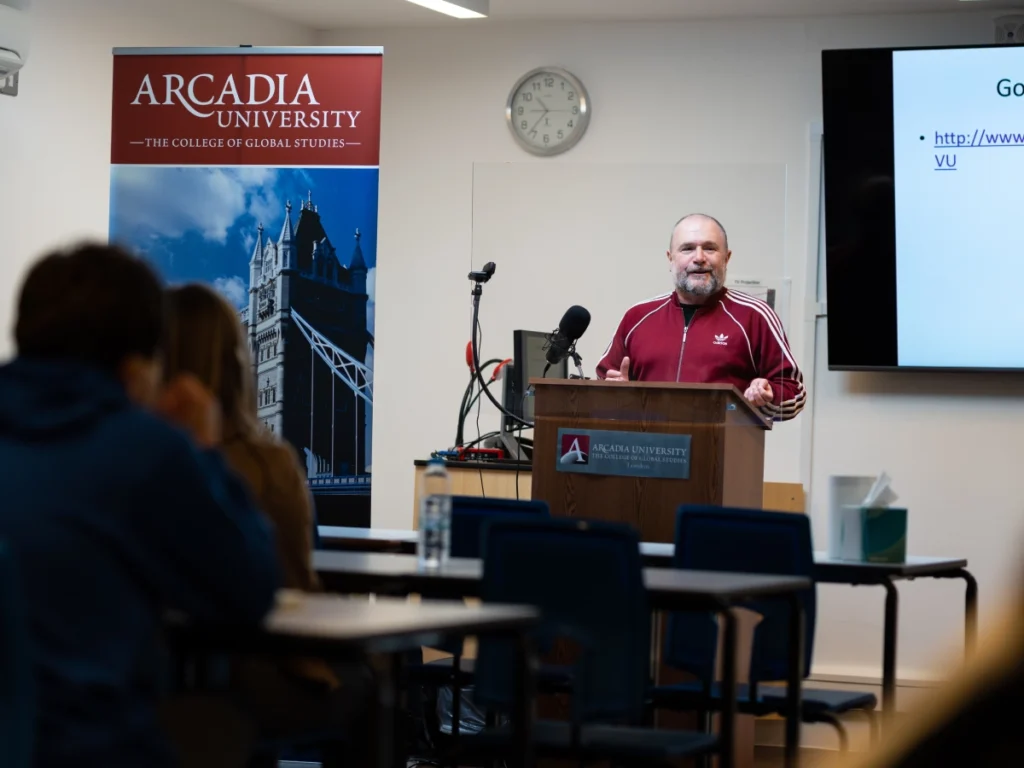
Begin your Preview course; meet new friends and dive into course themes and destination culture.
-
Prepare in pre-departure workshops covering money, phones, packing, health, and safety.
March
Spring Break Travel
-
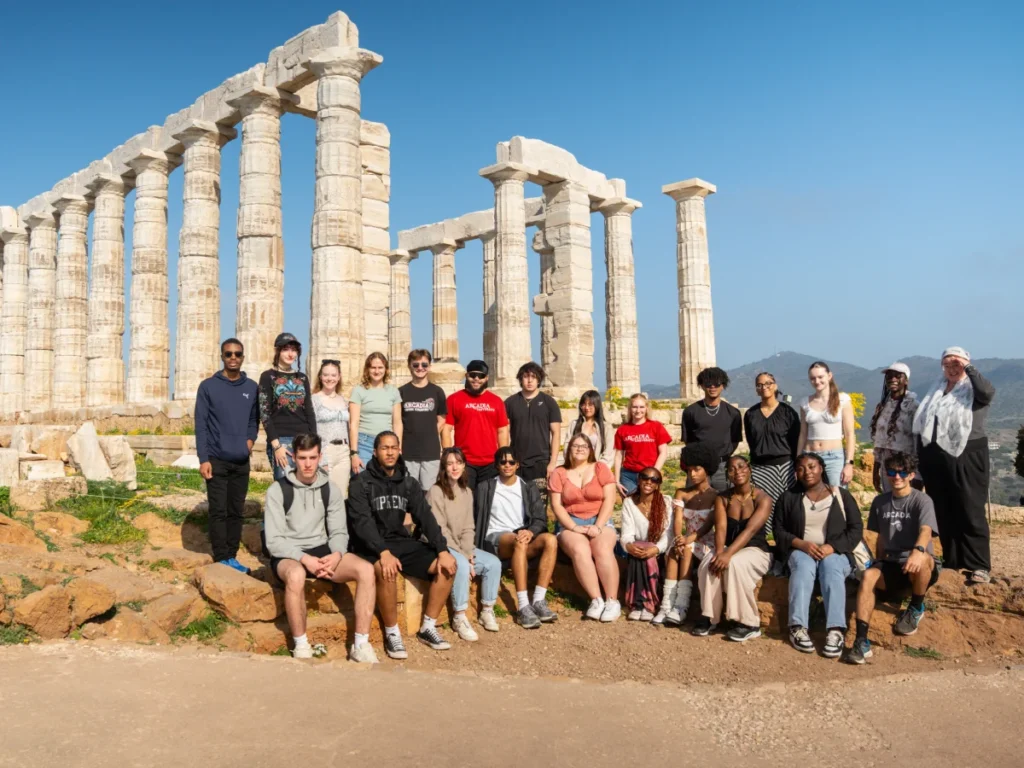
Travel during spring break week with your instructors and classmates.
-
Learn through excursions, site visits, and cultural experiences.
April
Reflect & Share
-
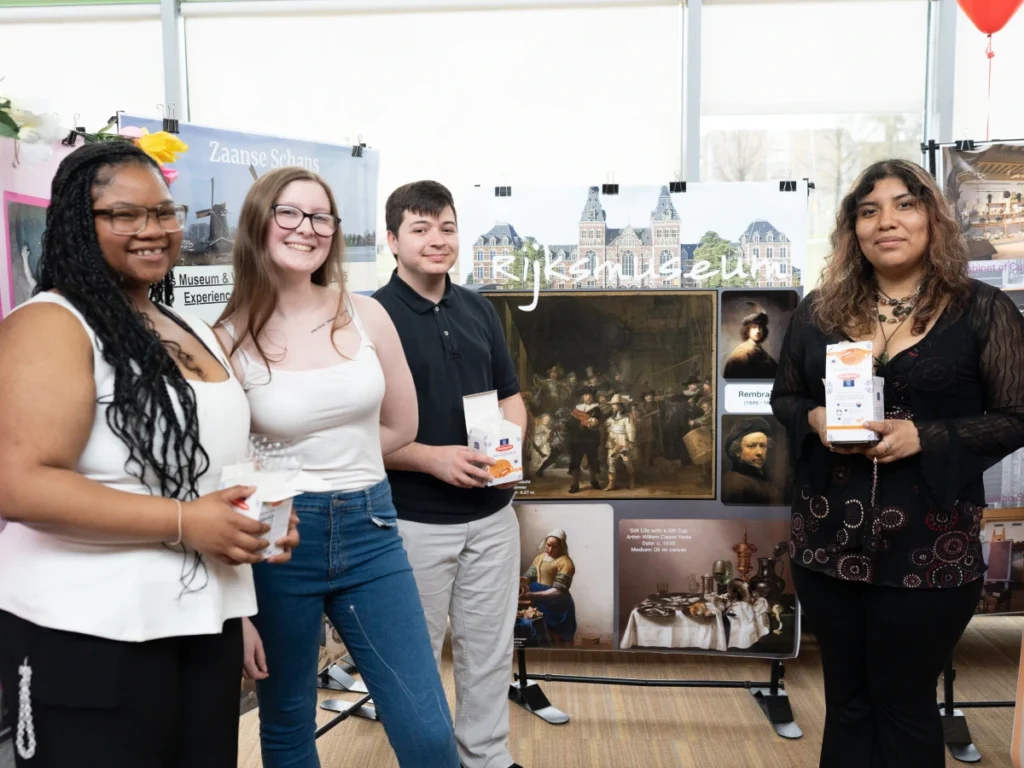
Wrap up your course and participate in Global Expo - an annual showcase of global learning.
-
Start thinking about your next study abroad plans!

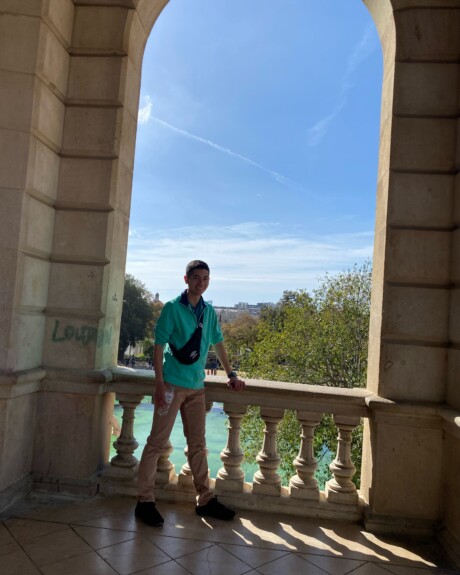
I chose to participate in the Barcelona Food & Culture Preview because I had the opportunity to learn about another country and then travel with a great group of students. Visiting another country is definitely a once in a lifetime experience in which every moment is extremely special. I met new friends and having two very wonderful instructors!

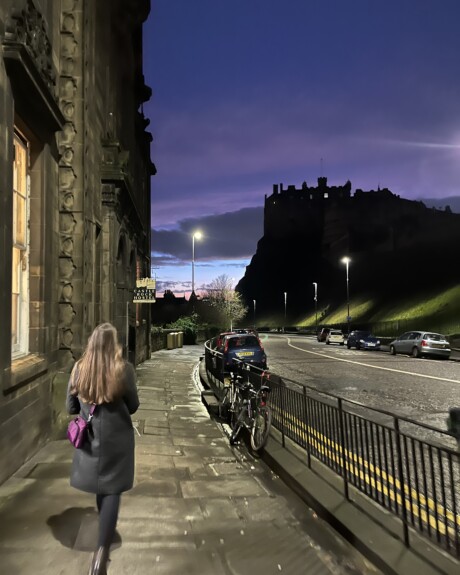
My favorite part of my Edinburgh Preview class was getting to connect with a group of people with similar interests I would not otherwise have met. I am a senior now and I still keep in touch with friends I met in my preview class! Our instructors elevated this class beyond expectations both inside the classroom and on the trip. The staff are just as excited to go on the trips as the students are!
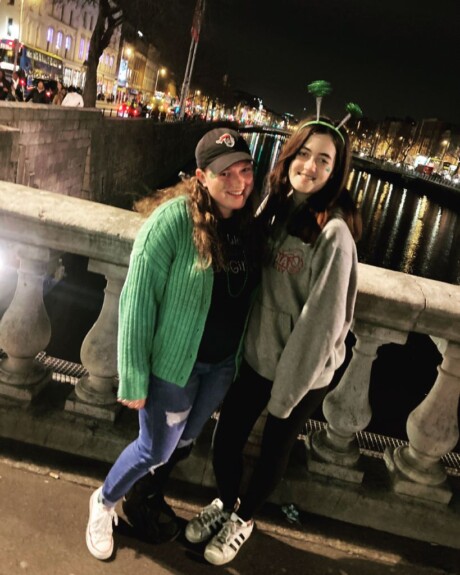
My favorite part about my Dublin Preview was getting to explore the ethics of dark {i.e. ghost and criminology} tourism and how different cultures approach violent parts of history in tourist settings - and taking part in Saint Patrick's Day festivities in the heart of Dublin!
Still have questions about Preview the World?
Curious about study abroad options, but not yet a Knight?
If you’re curious about the study abroad opportunities offered to Arcadia students, the Admissions team can help with that! Reach out at 215-572-2966 or admissions@arcadia.edu to learn more about Preview the World and other global opportunities.

