Three Questions with an Arcadia Professor: Dr. Jennifer Riggan on her East Africa-Based Research
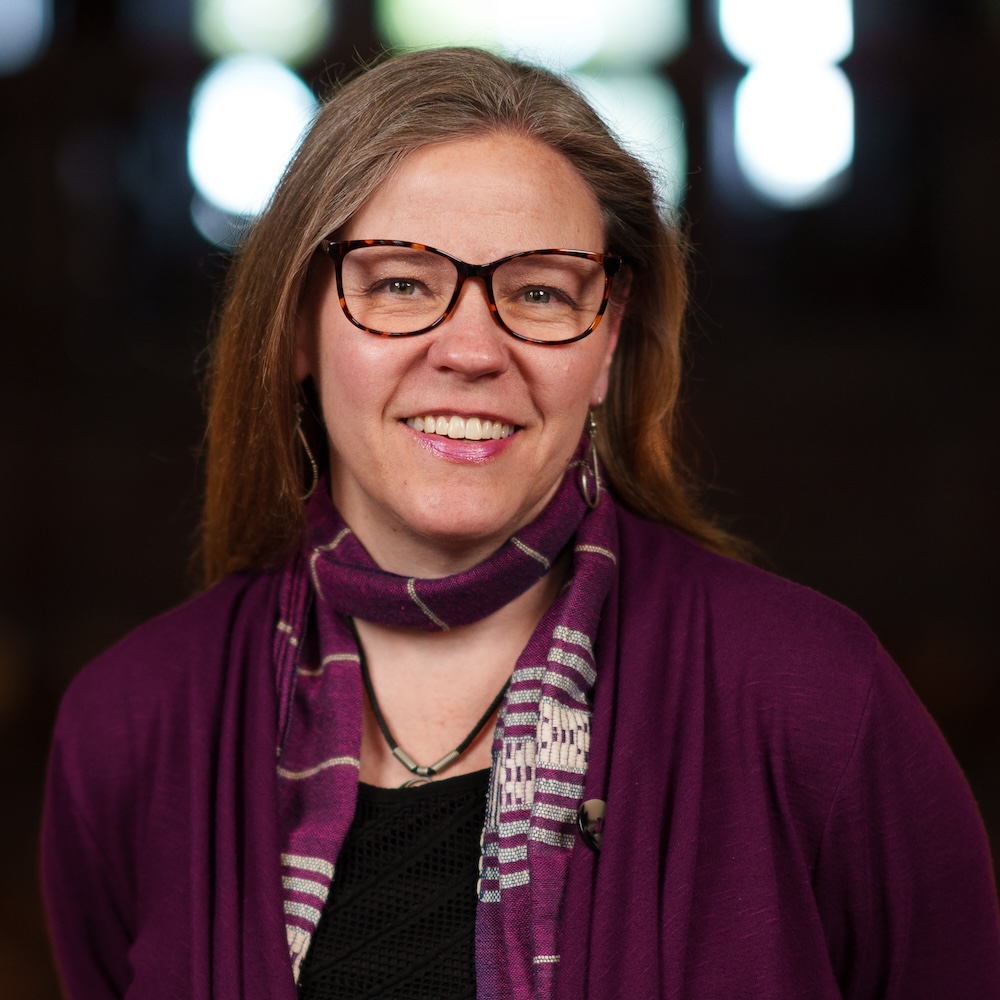
Dr. Jennifer A. Riggan, a professor and chair of the Department of Historical and Political Studies, is an expert on a part of the world that many are not familiar with: Eritrea and Ethiopia, in East Africa.
We asked Dr. Riggan to shed light on her background, the extensive research she’s conducted, and how students can get involved.
This Q&A has been slightly edited for clarity and length.
You are a political anthropologist. Please explain what that is.
Anthropology is the study of human cultures. How we think about culture has changed a lot over the years. It is now generally understood that “culture” isn’t separate from politics or the economy or institutions or anywhere that human beings gather collectively, but rather, culture is in all these things. Political anthropology looks at political cultures and the culture of politics. Like most anthropologists, I use a research method called ethnography, which uses observation of a social setting and interviews alongside review of documents, such as policies, historical context, etc., to make sense of social worlds.
My first book is about the formation of political identities in schools in Eritrea in the early-mid 2000s. More specifically, I wanted to understand how teachers, as state actors, shaped students’ beliefs about the nation and the state. My second book is about temporality and refugee policy in Ethiopia. Along with my co-author Amanda Poole, we wanted to understand how refugee policy shaped the way refugees think about time. Time is usually a problem for refugees–it makes them feel like they are stuck, or waiting, like their future is constrained and cut off. Living without a viable future is an extremely painful condition. It does a lot of damage. We call this temporal violence (or teleological violence). We also wanted to understand how refugees tried to push back against this constraint–how they worked to have control over their future and make time less painful.
What led you to base your research on Ethiopia and Eritrea? What interests you about this part of the world?
I have often said that I didn’t choose my research sites, they chose me.
In 1995, I went to Eritrea, through a very serendipitous process, as a Peace Corps Volunteer. While there, I met my life partner, who is Eritrean. Then, a war broke out that separated us. Eritrea became very authoritarian and started forbidding its citizens from leaving the country. While my partner was stuck in Eritrea, I went to graduate school so that I could have long breaks to visit him. We got tired of the long-distance relationship, so I decided to move there to do research for my dissertation. Finally, after living there for two years, we were able to get him out of the country.
The research I wrote about in my book about Eritrea was not exactly welcomed by the government, which was very sensitive about anything they regarded as critical, although I didn’t set out to critique the government. As a result, I, along with many other scholars, am sort of low-key persona non grata in Eritrea. But, I still feel deeply committed to researching Eritrea and Eritreans.
In the meantime, many Eritreans had fled the country, some of them to neighboring Ethiopia. When I had my first sabbatical, I got a Fulbright fellowship to spend a year doing research on Eritrean refugees in Ethiopia. It felt like the closest I could get to Eritrea. My partner also grew up in Ethiopia (although he is Eritrean), and we still have family there. It meant a lot to be able to spend a year with our kids in the place he grew up.
What is one thing you believe Arcadia students and others should take away from the research you’ve done over the years?
One thing? There are so many things! I hope students will take my classes to learn more.
I think there are two things in particular: One thing that is important to understand right now is that refugees and migrants are people very similar to us. They have hopes and dreams and plans and the desire for a future that is better than the present. They care for their families and their communities. They go through hard times. They want the world to be a better place. They struggle and have bad days and weeks and years. They aren’t different from us, but circumstances have made their lives very difficult. Refugee and migrant policies should reflect our similarities, our shared humanity, but they don’t. Instead, they are intent on keeping people out, keeping people separated.
I’ve also been thinking a lot about the things I was writing about in my first book and how relevant they are today. That book is very much about helping people understand the myths we carry with us about what a nation-state is (and what a nation is and what a state is). We learn those myths from a very young age–usually in schools–and it’s very hard for us to imagine a world that is not held captive by the nation-state and its narrow nationalisms. In these political times, it’s more important than ever to explore the myths that shape our political reality and begin to imagine and work towards a different kind of world.
BONUS: How can students become involved in your research? What’s the best way to contact you?
I’m at the very beginning of an archival (historical) project along with an Ethiopian colleague that I am very excited about. We’re looking at the history of refugee management in Ethiopia. In the 1950s and 60s, Ethiopia was hosting refugees even before they invited the United Nations High Commissioner for Refugees (UNHCR) into the country (UNHCR is the global body that manages refugees worldwide). What we are learning is that many of the things Ethiopia was grappling with as they tried to develop refugee policies are the same things we are grappling with now. Questions about the nation-state are at the center of it! What is it? Who belongs? Who’s an insider and an outsider? How do you “host” outsiders? How do states make themselves strong? I feel like this project is bringing together all of my interests.
I’d love to have students who are interested in doing literature searches or helping read and analyze documents help me with this! If there are any Amharic speakers out there in the Arcadia community who’d like to work on this project, that would be amazing. I can be found in Easton 235 or email at rigganj@arcadia.edu.

