Stringer ’20, ’21M Enhances Students’ Critical Thinking Skills by Breaking Down Questions
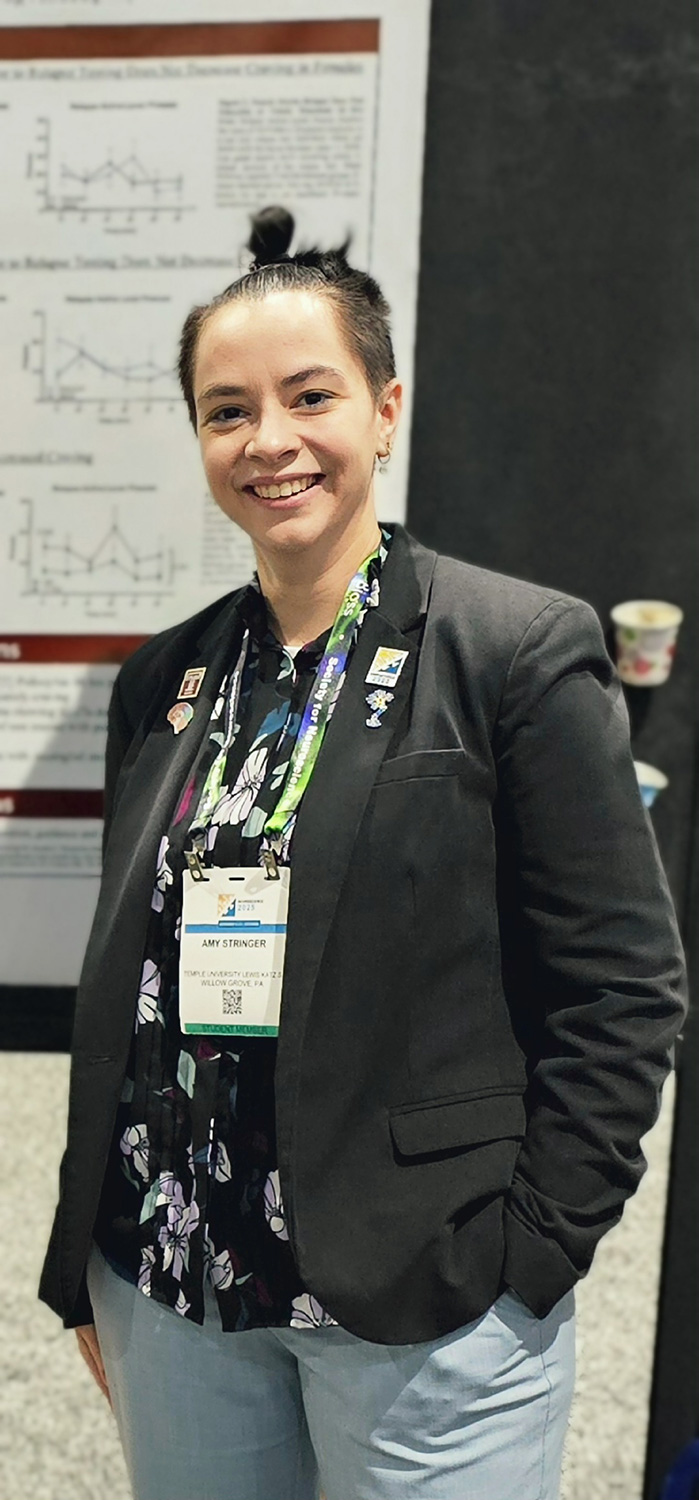
Adjunct Professor of Forensic Science Amy Stringer ’20, ’21M published research on an innovative classroom learning project designed to strengthen undergraduate students’ critical thinking skills in The Journal of Forensic Science Education.
The article, “A flipped classroom approach: Enhancing critical thinking with Poll Everywhere and question dissection techniques in undergraduate forensic science education,” examines how short, targeted, question-based activities can improve students’ analytical reading, thinking, and problem-solving abilities in an entry-level criminalistics laboratory course.
“I learned through my experiences in medical school that efficient critical thinking is a skill that is acquired over time,” said Stringer. “What if I could help facilitate undergraduates in my lab to build that skill early?”
The research explored a flipped classroom model in which students engaged with interactive polls, using the online Poll Everywhere platform, with definition-based “simple” questions and application-based “complex” questions during lab sessions. After initial instruction on how to dissect and analyze complex prompts, students independently applied these techniques throughout the semester.
Results showed measurable gains in student performance and confidence. While accuracy on simple questions remained consistent, accuracy on complex questions increased, and response times decreased over time. Pre- and post-course surveys also revealed improvements in students’ perceived critical reading and thinking skills.
“I hope that they found it empowering, and discovered that they can improve their own critical thinking skills in incremental ways that are impactful on and for their learning moving forward,” Stringer said.
Stringer hopes to expand on this research in different ways with future labs.
“I can incorporate the same question breakdown style for new lab students in the future, so more people have the chance to benefit the same way the earlier students did,” she explained. “I am also thinking of ways to develop another study focused on incorporating a gamification component to lectures or labs to see if having milestones, badges, or scoreboards enhances student motivation for studying or participation.”
Stringer is an MD/PhD student with a strong foundation in both medical education and scientific research. She has completed three years of medical school and is currently in her first year of graduate studies, working toward a PhD. Stringer’s research experience includes work at the Fox Chase Cancer Center and the Center for Forensic Science Research and Education (CFSRE), where she explored cancer and forensic biology. Her academic journey reflects her deep passion for science, as well as her dedication to advancing knowledge in medicine and forensic science.

