Dearest Gentle Reader: Take That Weird Class
Recently, on my TikTok feed, a trend keeps resurfacing where kids prank their parents by pretending they registered for classes way too late and were stuck choosing absurdly specific leftovers. Think “The History of the Paperclip”, “Niche Birds of the Midwest”, or even “Boston During the Vietnam War”. The joke hinges on the same punchline every time when parents react with confusion or mild horror while asking some version of, “What are you going to do with that?” or “What’s the point of taking that?” It’s funny because it taps into a very familiar anxiety I think a lot of people share: college is supposed to be practical, strategic. A stepping stone toward a career that can be easily explained to your distant relatives at family gatherings. Classes that sound too specific, too niche, or even just too fun are often treated like mistakes rather than opportunities.
The irony in all this is that my actual schedule this semester could pass for one of those prank videos. I’m taking “Gender and Sexuality in Horror Fiction”, “Conspiracy Theories”, “Into the Multi-Verse: A Fanfic Writing Workshop”, and “Bridgerton: Depicting Diversity & Desire”. On paper, these classes sound a bit strange and maybe even unserious. But even just a couple weeks in, they are also some of the most intellectually demanding, creatively engaging, and genuinely valuable courses I’ve ever taken. They have made me realize something incredibly important: classes that sound “weird” are often where the most meaningful learning happens. I don’t think I truly understood how much I could love learning until I started learning about what I was interested in. Not what my parents wanted me to learn, or what my peers expected of me, but focusing on what piqued my interest.
Highly specific courses exist because knowledge itself is specific. Broad, required classes introduce you to a field, but niche courses ask you to interrogate it. We even have ways you can create your own major to tailor to your interests. A class like “Gender and Sexuality in Horror Fiction” isn’t just about the horror stories; it’s about how fear reflects cultural anxieties, how bodies are policed, and how marginalized identities are represented as “others” (or erased) in popular media. My entire thesis manuscript was on the basis of psychological horror, and now it is becoming a lens for discussing power, repression, and resistance. Suddenly, a genre often dismissed as crude entertainment turns into a critical framework for understanding society.
The same is true for “Conspiracy Theories”. On the surface, this class sounds like an internet rabbit hole turned into a syllabus. In reality, it’s a study of epistemology, psychology, media literacy, anthropology, and political power. It combines so many fields and ways of thinking, so we can critically analyze the existence of conspiracy theories. Why do people believe certain narratives? How does mistrust spread? What happens when personal identity becomes tied to alternative “truths”? These are not abstract questions as they truly shape elections, public health, and social cohesion.
Even “Into the Multi-Verse: A Fanfic Writing Workshop”, which might seem like the least “serious” of all, has already challenged me in unexpected ways. Writing fanfiction requires close reading, a deep understanding of character, and awareness of the audience. It is so different from creating your own story because there are certain rules you have to follow. It forces you to think critically about storytelling conventions, intellectual property, and creative ownership. We are even diving into how people have published fanfiction, but just changed the story so it’s not copyrighted (like the After or 50 Shades of Grey series, which were born from fanfics). More importantly, it asks us to engage with writing not as an obligation, but as play, which is often where experimentation and growth thrive. That’s the thing no one really tells you about learning: enjoyment is not the enemy of rigor. In fact, enjoyment often is rigor if it is presented correctly. When you care about what you’re studying, you read more closely, you think deeper, and you argue more passionately. You’re willing to sit with discomfort and complexity because the material feels alive rather than assigned.
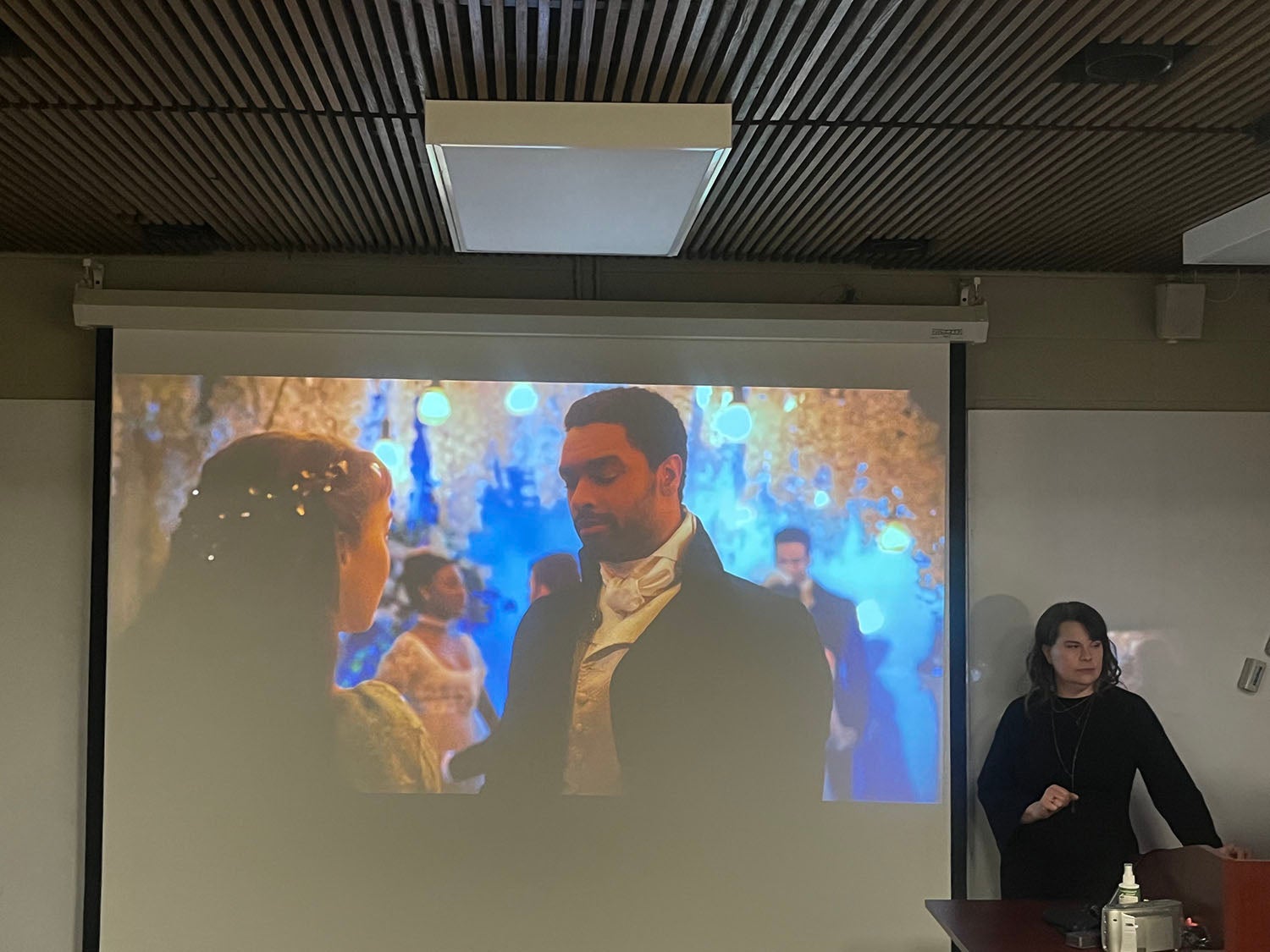
There’s also a deeper value in these courses that has nothing to do with resumes or job titles. Classes like “Bridgerton: Depicting Diversity & Desire” invite students to examine representation, desire, race, and class through pop culture, which is a medium many of us already engage with daily. It blends the historical criticism the show presents and the pop culture knowledge that we students have, so we are able to have incredibly intellectual conversations because of it. By analyzing something familiar, you learn how ideology works subtly, embedded in cliche romance arcs and modern casting choices. You begin to see how stories shape norms, and how “escapist” media can reinforce or challenge social hierarchies.
When students are discouraged from taking fun or niche classes, the message they receive is that education should feel like a means to an end, something to just get over with, rather than enjoy. But college is one of the few spaces where curiosity should be institutionalized, where you are allowed (even encouraged) to ask strange questions and chase unusual interests. Avoiding that opportunity in favor of what feels “useful” often leads to burnout, disengagement, and a shallow relationship with learning itself. Ironically, the skills we’re told to prioritize (critical thinking, adaptability, creativity, communication) are exactly what these “weird” classes cultivate best. The ability to analyze narratives, question dominant explanations, synthesize theory with culture, and write with a critical voice doesn’t come from checking off requirements alone; it comes from a deep care and desire to learn more.
So if you’re registering for classes this semester and feel drawn to something that makes you think harder or just sounds fun, take it and take it seriously. Fun does not mean easy; it means engaging, community, and it means you’re more likely to walk away with knowledge that sticks, not just credits that count. And if someone asks what you’re going to do with a class like “The History of the Paperclip”, maybe the answer isn’t a career path, but a sharper mind, a deeper curiosity, and a reminder that learning is supposed to feel exciting and hard.

