Why Do Professors Make a Difference?
When I think about why I’ve chosen my classes at Arcadia, I’d love to say it’s always been about fulfilling requirements or exploring new academic interests, but if I’m being honest, one of the biggest factors is the professor who is teaching it. The person at the front of the classroom can truly make or break your experience. A subject that might seem intimidating or boring on paper can become transformative in the right hands. Over my time here, I’ve been lucky enough to build meaningful relationships with professors across disciplines, and those connections have shaped not only my academic journey but also my personal growth. To better understand what makes these relationships so impactful, I spoke with two professors who have deeply influenced my time at Arcadia and its community.
Professor Rhianon Visinsky “V”, an adjunct in the English Department who has been at Arcadia for 17 years, immediately pointed to one word that makes a student-professor connection meaningful: trust. “I think that any classroom experience needs to be based upon trust. The students need to trust that I am there to help guide them in a way that benefits their growth, and I need to trust that they are open to the experience of learning together, which is not just memorization or perfunctory critical thinking. It involves some risk-taking.”
The idea of risk-taking when it comes to classes really resonates with me. Some of the most powerful classroom moments I’ve experienced have been when I’ve stepped outside my comfort zone to share a vulnerable interpretation of a text or challenge an idea I wasn’t sure I fully understood/agreed with. For instance, in my Bridgerton class with Professor V, I felt comfortable enough to discuss female masturbation, which is not something I ever thought would happen in college. Those moments can feel intimidating, and without trust, they simply can’t and won’t happen. But after cultivating a relationship based on trust, conversations begin to thrive.
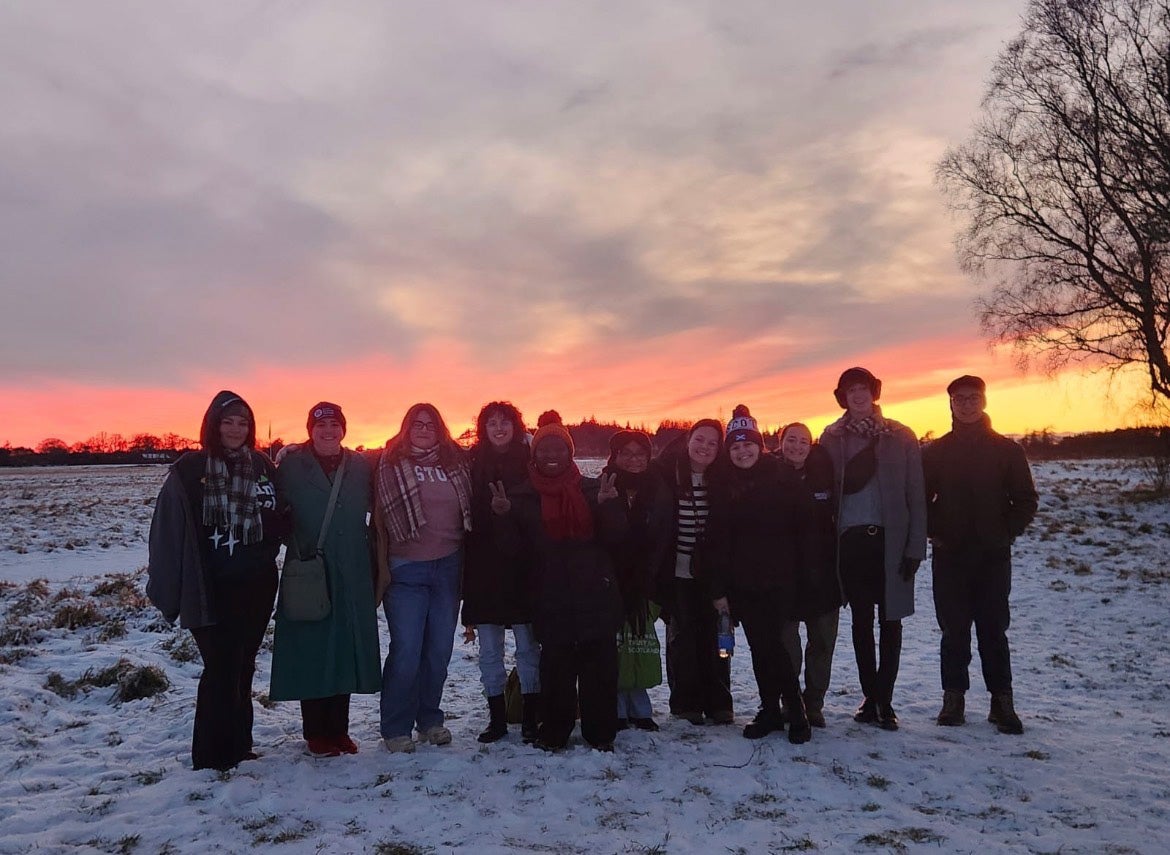
Professor V added, “When my students and I trust each other, we build a classroom space that makes the process of learning so much more rewarding on an academic AND personal level. We get to grow together and feel connected in a way that makes the education process feel like a part of our self-development.” That distinction between academic and personal feels crucial. The best professors don’t separate the two because they understand that learning doesn’t happen in a vacuum; it is tied to who we are becoming. When a classroom feels like a space where growth is shared rather than measured, education becomes something much more meaningful than just a grade on a transcript. I even took the Global Field Study class I did, Great Britain: Lochs, Legends, and Literature, because she was one of the instructors; I knew I would feel comfortable abroad with this professor.
Professor Matthew Heitzman, Chair of the English Department and a faculty member at Arcadia for 11 years, emphasized another key element, which is seeing students as whole people. It seems obvious, but I don’t believe we treat each other like that often enough. From his perspective, what makes the connection meaningful is “getting to celebrate their successes, support them during challenging times, and watch them grow during their time at Arcadia (and beyond).” He described commencement as one of his favorite days of the year. “I get to think about how hard my students have worked to cross that stage. And I get to be grateful that I was able to help them a bit along the way.”
There’s something deeply comforting about knowing your professors aren’t just counting your absences or grading your essays, but that they’re excited to see you graduate, even if it means you won’t be a part of their classroom anymore. They see the arc of your growth and are truly proud of what you’ve accomplished. Professor Heitzman also shared how being an advisor shapes his teaching. “The more I know about my students, from the work they’re doing on and off campus to the challenges and successes they’re having in the classroom, the better teacher I am,” he said. “I learn so much as an advisor that makes me a better teacher.”
That holistic perspective allows him to rethink assignments, course structures, and policies to better support students. He uses something called “contract grading”, which has become pretty popular, where students and he create a formal agreement regarding assignments, attendance, and all other aspects of the classroom. I personally have found this incredibly helpful because the expectations for being a student in his class are so clearly outlined. Also, when professors understand the pressures we’re navigating, like jobs, extracurriculars, family responsibilities, and mental health, we as students better understand their responsibilities and pressures as well. I think we sometimes forget that professors are constantly learning, too. They adapt, revise, and grow based on what they observe in us. Our feedback, our struggles, and our questions shape the way they teach future classes. Being a peer mentor for a First-Year Seminar class taught me this through first-hand experience; after hearing feedback from previous students, the professor and I implemented changes we felt would be beneficial to the new students.
Both professors highlighted authenticity and genuine care as central to building relationships beyond classroom requirements. Professor V said one of her primary approaches is simply being herself.
“My teaching style and personality might not be everyone’s cup of tea, but that’s ok,” she said. “I still let everyone in my classes know that I am there for them and that we are in this thing together. I make mistakes, I talk about my life, and I share my passion for the subjects we explore in my classes in the hopes that it will show them that I do this job because I genuinely care and think our time in the classroom is precious.”
There’s something powerful about a professor who openly admits they make mistakes. When professors model vulnerability and passion, it gives students permission to do the same. Similarly, Professor Heitzman said he strives to show students how invested he is in their well-being.
“Every student is unique, with their own lived experiences, talents, and goals,” he explained. “My goal as a teacher and an advisor is to make each of my students feel seen and respected.”
He also described himself as an “unabashed cheerleader” for his students. As someone who’s been in his classes, I would definitely agree. In competitive academic environments, it’s easy to feel like you’re constantly being evaluated, but having a professor who celebrates what you bring to the classroom each day changes that dynamic entirely. Even making one comment that furthers the conversation in class gains you ultimate praise from Professor Heitzman. It shifts the atmosphere from judgment to encouragement.
“My hope,” he added, “is this creates a foundation of trust that makes them feel comfortable building a working relationship with me.” Again, we return to the idea of trust in the classroom. It’s cultivated through authenticity, consistent support, and visible investment, and is a vital component to a successful student-professional relationship.
What I’ve realized over my four years is that professors make a huge difference because they shape not only what we learn, but how we experience learning. They create the environment, they set the tone, and when they choose to invest in their students, that investment has a ripple effect. Professor V shared something that perfectly captures this impact. She shared that she has an email folder titled “happiness,” filled with messages from former students about their classroom experiences. She reads through them when she’s feeling stressed as a reminder of why she loves her job.
“When a student tells me that something we did in class has impacted them in a meaningful way, I feel blessed to have been a part of that experience,” she said. “I want to keep offering students the invitation to think deeply and explore who they are and how they want to be in the world.”
That idea, that education is an invitation, feels especially powerful. Professors aren’t forcing us into growth; rather, they’re inviting us into it. And when you accept that invitation, the impact will last a lot longer than four years.
It’s easy to reduce a course to its syllabus (required texts, assignment deadlines, and grading percentages), but what truly defines a class is often intangible. It’s the feeling of walking into a room where you know your voice matters and the excitement of being intellectually challenged by someone who genuinely wants you to succeed. Professors make a difference because they turn institutions into communities. They model what it looks like to care deeply about ideas and about people. As students, we may not always express how much those relationships mean in the moment, but long after we’ve walked across the graduation stage, we remember the professors who believed in us. And hopefully, they remember us too.

